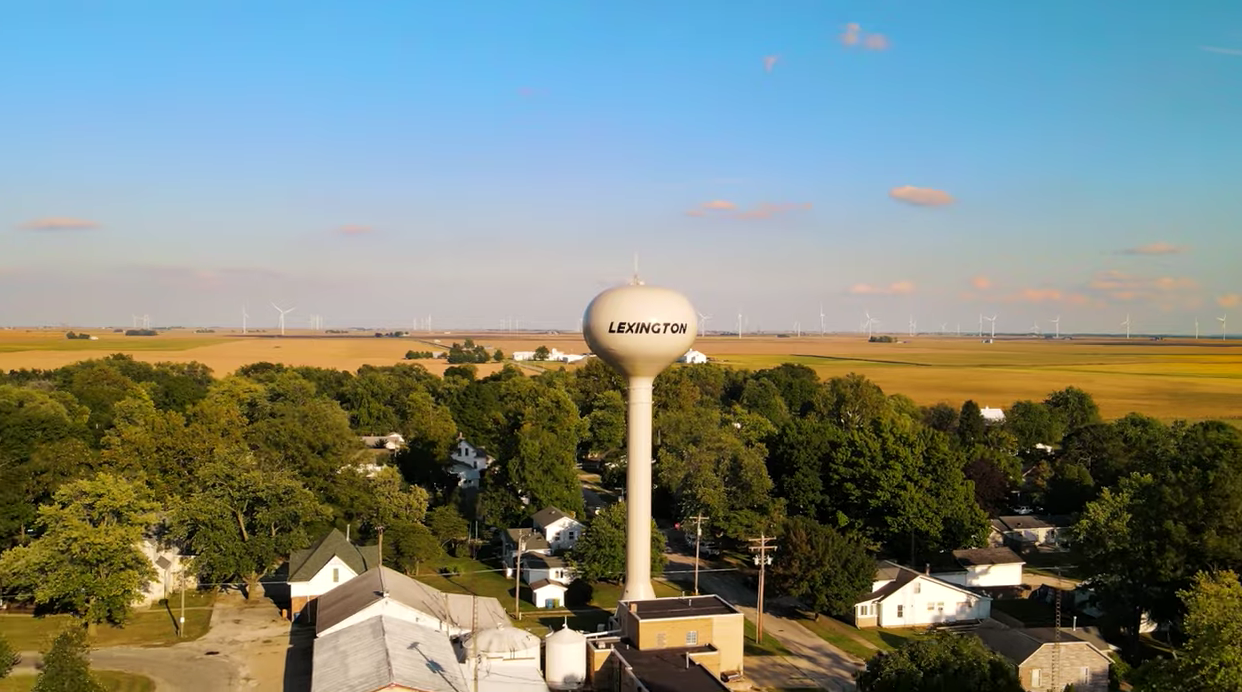
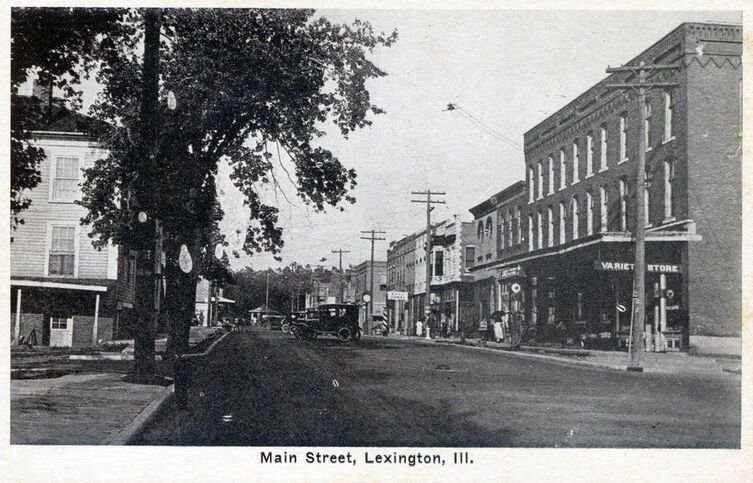

A Brief History of Eating & Drinking in Lexington: The Story of 510 W. Main Street and Analytical Brewing
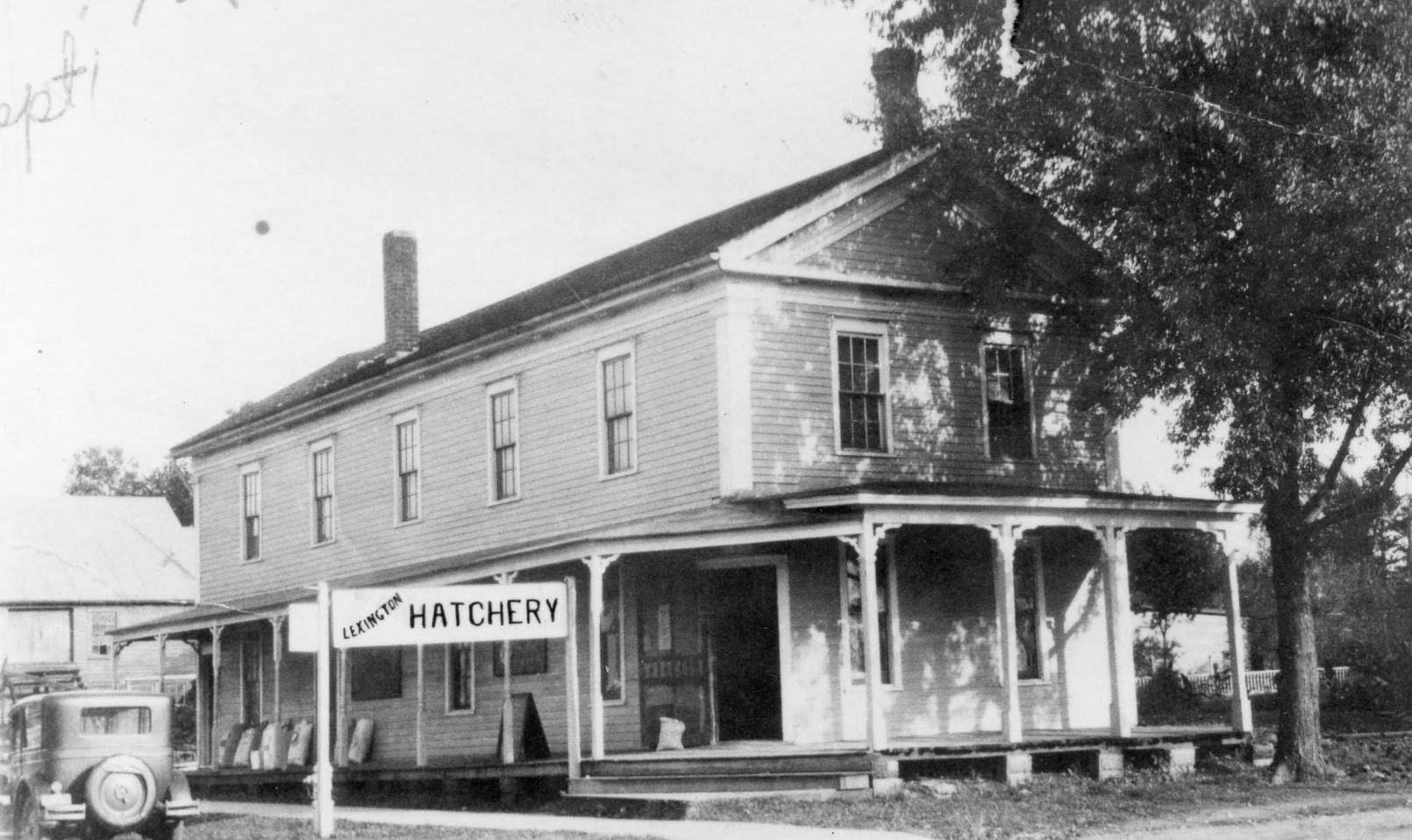
Kent Hotel/Charles Peck Poultry House, Circa 1926, Source: THE FORT
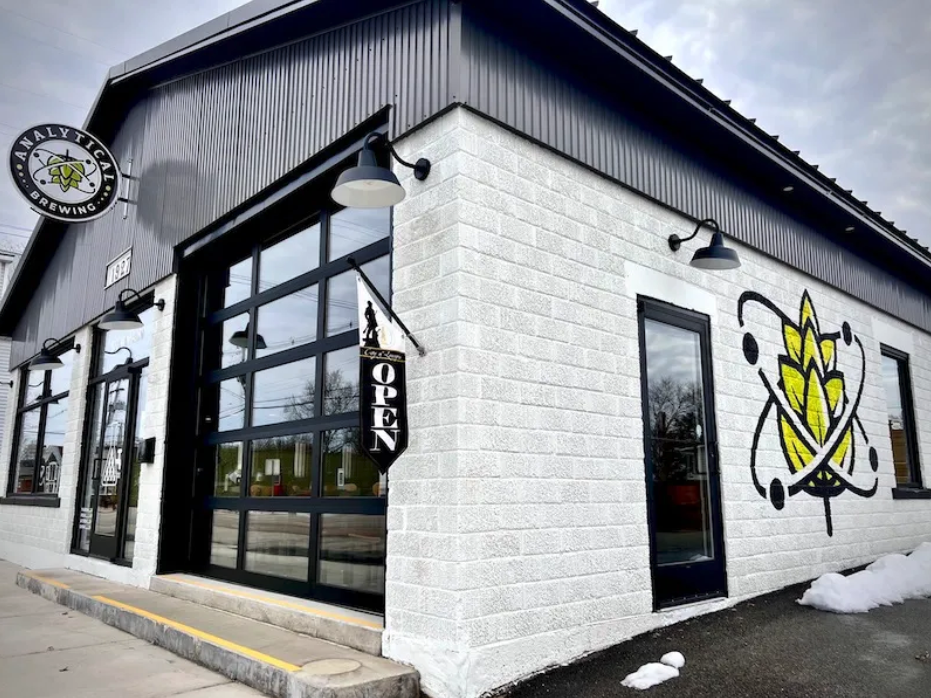
Analytical Brewing at 510 W Main Street, Circa 2023, Source: Illinois Brewing
A Brief History of Eating & Drinking in Lexington: The Story of 510 W. Main Street and Analytical Brewing
Some buildings take time to find their purpose. The sturdy building that sits at 510 W. Main Street in Lexington will be 100 years old in 2027, but it’s only in the last decade that it’s found its most prominent place in the Main Street business district.
The Rise and Decline of the Poultry Shop
100 years ago when Charles Peck built his new poultry shop on the east side of the old Kent Hotel property (now 512 W. Main Street**) he was participating in an agricultural economy that was, at the time, rapidly changing. In the old rhythms of Midwestern farm life, poultry, eggs, milk, and seasonal vegetables were grown by individual farming families, who were also raising diversified crops and livestock for local markets. Farm families would sell their extra poultry, produce, and dairy to local markets and stores, the only way townsfolk would otherwise have access to these foods, if they didn’t raise their own.
Poultry shops were a fixture of small-town commerce in the early twentieth century, serving a role that is difficult to imagine today. Before refrigeration reached most American homes, before the rise of the industrial chicken processing plants that would transform the food system after World War II, fresh poultry was a local affair. Farmers raised chickens and a town poultry house served as the connection between the farm and the family table. Locally raised poultry and fresh eggs moved through these storefronts daily.
Charles Peck was a farmer from an area near Ballard on Route 4 (the original Route 66), who saw an opportunity to expand his own poultry operation by opening up a shop in Lexington. In 1926 he purchased the old Kent Hotel building and set his wife up as the manager of Peck's Poultry Store while he constructed a new building next door. By 1927, the poultry shop had relocated into that fresh structure, with the old hotel serving as storage. The building changed hands but remained a poultry shop for nearly 20 years, until Swartz Poultry moved to a larger building in the mid 1940s.
It was honest, unglamorous work, and the building was built for practicality; sturdy, rectangular concrete. The poultry shop was, like many institutions in the 20th century, a sort of rest stop between the old patterns of Midwestern life and the coming modern world. As agriculture became a big, corporate global affair, the poultry shop eventually gave way to industrial poultry farms and eggs became a supermarket staple.
Slow Long Days for 510 W. Main Street
After Swartz Poultry departed in the mid-1940s, the building entered a long, quiet chapter. Rutherford H. Downes opened an implement/farm equipment store there for about a decade, selling Massey-Harris and New Idea farm equipment to local farmers. He and his wife Francis raised four daughters in Lexington while the business ran its course, closing in 1956. After the implement store closed, the building spent the next 60+ years as a storage facility.
As 510 W. Main Street sat quiet, the city of Lexington saw life shift dramatically as Interstate 55 pulled nearly all of Route 66’s traffic away from Main Street, rerouting the casual visitor onto the controlled-access highway two miles west of town. From the 1970s until the 2010s more and more buildings along Main Street joined 510 W Main St as storage buildings.
Get Big Or Get Out
To understand what happened to the poultry shop, it helps to understand what happened to the agricultural and economic system that built it. The poultry shop Charles Peck established in 1927 was a product of a particular moment in Midwestern farming from the 1860s until the mid 1940s. During this time, agricultural production in central Illinois was beginning to thrive with the invention of new equipment, early corn hybridization, and growing communities. Agricultural production was distributed across hundreds of small family farms. That system did not survive the industrialization of American food production that kicked into overdrive after World War II. By the postwar decades, the small-scale poultry farmer had largely given way to large processing operations, and the local poultry shop had given way to the supermarket meat counter.
The implement store that followed was on a similar path. Rutherford Downes's customers were farmers tending their own ground with their own equipment. Over the decades that followed his store's closure, those farms consolidated steadily. By the 1970s, US Secretary of Agriculture Earl Butz was telling farmers to “get big or get out” of farming. Today, the fields have consolidated into fewer large farms, farming industrial scale corn and soy. This kind of agriculture requires fewer people living on (and off) the land, fewer storefronts to sell food grown by local farmers, and less need for the kind of small-town implement dealers that sat at 510 W. Main until 1956.
What Came Next
In 2021, three couples from Hudson, Illinois began looking for a home for their dream brewery. The Arndts, Graves, and Poehlmans were neighbors who had been thinking seriously about the craft beer business, and when their search brought them to Lexington, something about the town and the building at 510 W. Main Street caught their attention. A meeting with mayor Spencer Johansen followed, and the purchase and renovation of the former poultry shop turned storage shed began in earnest.
The renovation was not a small undertaking. The building needed a lot of work. The building needed updated plumbing, electrical, floors, windows, and a whole host of other renovations to bring Analytical to life. The renovation was a community effort. As they renovated the building, Analytical Brewing established a “patron” program, to help local craft beer lovers support the ongoing effort.
The result of the extensive renovation is a welcoming space with a modern industrial design that is comfortable and full of atmosphere. The front of the building is now primarily glass with a large garage door that can be opened to the street on nice days.
"Our focus is on producing high-quality beers that are true to style," Graves said. "We want to have a balanced lineup of beers that appeals to a wide spectrum of customers." The tap list reflects that intention, ranging from the light, drinkable 40 Horse Limit (a partner beer with Lake Bloomington institution Green Gables) to the Siriusly Chocolate Stout, made in partnership with coffee roasted across the street at Sirius Coffee Roasters to an ever-changing menu of seasonal beers.
A New Kind of Traffic
The travelers who stop in Lexington today are no longer the road-weary motorists of the Route 66 era, pulling off a two-lane highway because the next town was thirty miles away. Most of Analytical’s out of town traffic is making a deliberate choice to head to Lexington to enjoy a drink, trivia night, or one of the regular food trucks parked in front of 510 W. Main Street. Likely, the new visitor saw something online, heard a recommendation, or made a deliberate detour off Interstate 55. Locally made agricultural products (like beer) are no longer a requirement for survival, but a special experience the discerning eater and drinker seeks out.
Where Route 66 once naturally directed traffic right into Lexington, travelers would stop at a local restaurant, hotel, or market and buy locally made food and drink because that’s all that was available. Today, while truckers and roadtrippers mostly stay near the highway, Lexington is becoming a destination for people looking for the type of local quality Analytical and their neighbors on Main Street like Lexington Social, Kemp’s Upper Tap, and Sirius Cafe are currently offering.
The building Route 66 passed by finally became a destination.
A note on building address numbers: As land changed hands and subdivided addresses, lot numbers can sometimes be difficult to track. 510/512 W Main Street were both connected as a single lot (The Kent Hotel, and following establishments) until the 20th century.
All Lexington History Project articles were written and edited by Nicholas Rynerson and Elizabeth MacPhail, with research and editorial contributions from THE FORT Historical and Genealogical Society in Lexington, Illinois.
A Note on Citations: All non-cited facts, dates, and addresses were provided from the archives of THE FORT Historical and Genealogical Society in Lexington, Illinois. For any additional information on specific town history, email THE FORT at thefortoflex@aol.com. For any suggested chronological changes regarding the information in this article please email nick@bolt-cutter.com.
Like this article? Download a PDF
Find All the Articles Around Town
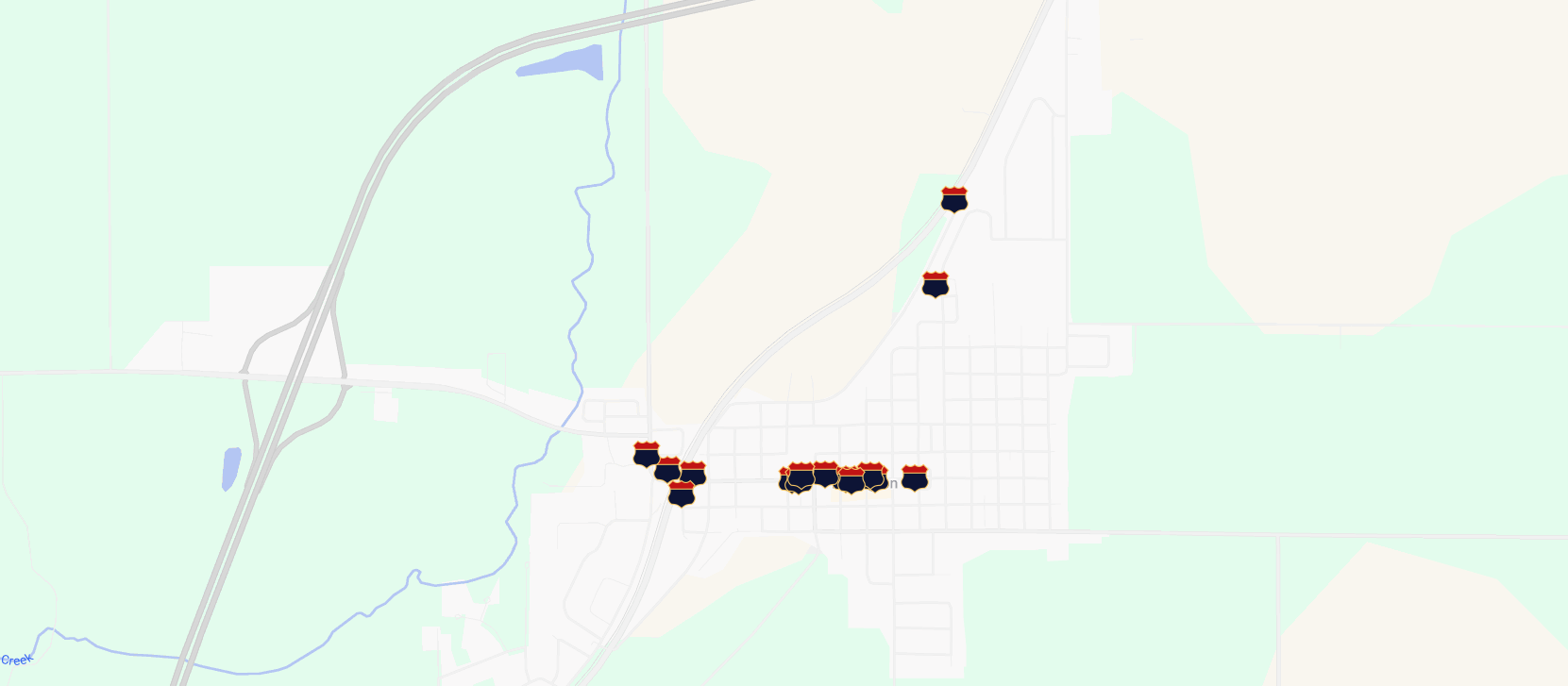
Click through the custom Google Map below to find all of the Lexington History Project signs and articles placed around town.
Presidential Visits. Supreme Court Cases. Railroads. Route 66.
Established in 1836.