
Forged in History: A Small Shoppe's Lasting Legacy
Forged in History: A Small Shoppe's Lasting Legacy
In a different era, a blacksmith shop was just as essential to a growing community as the dry goods market. Blacksmithing is one of the oldest skilled trades in human history, beginning with primitive tools, weapons, and hardware, and evolving over the centuries into horseshoeing and farm machinery as the needs of the community changed. Before the Industrial Revolution, the trade was indispensable to any community, and the earliest days of Lexington were no exception. The first blacksmith shop was established when the the town was just beginning to take root.
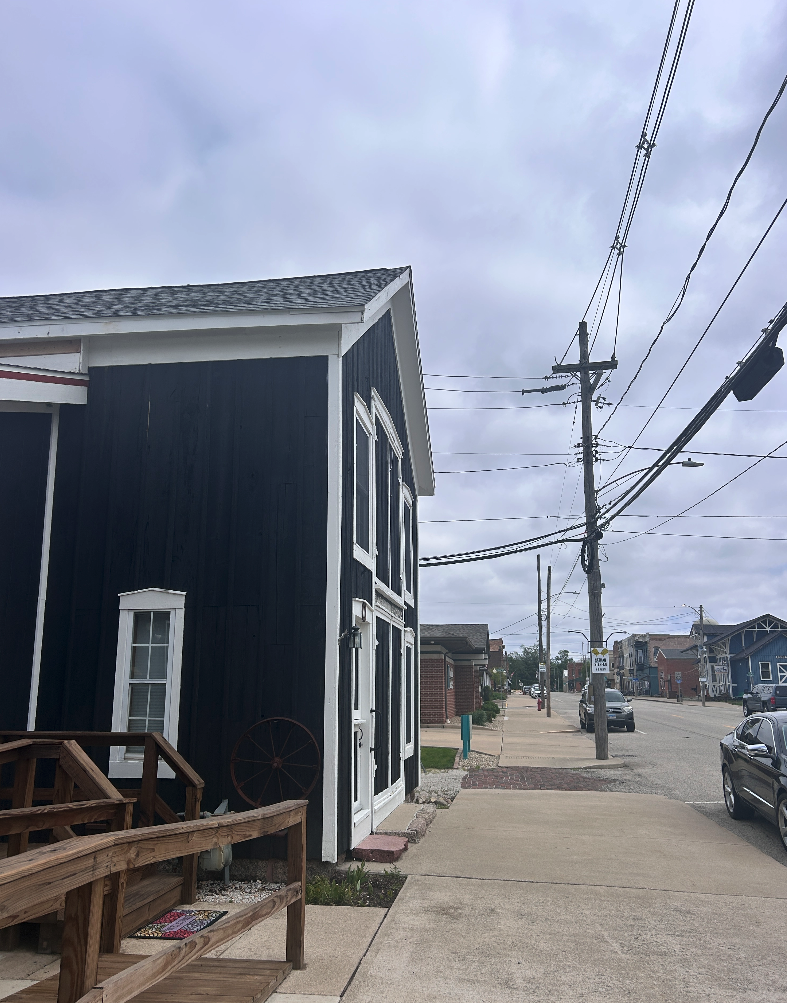
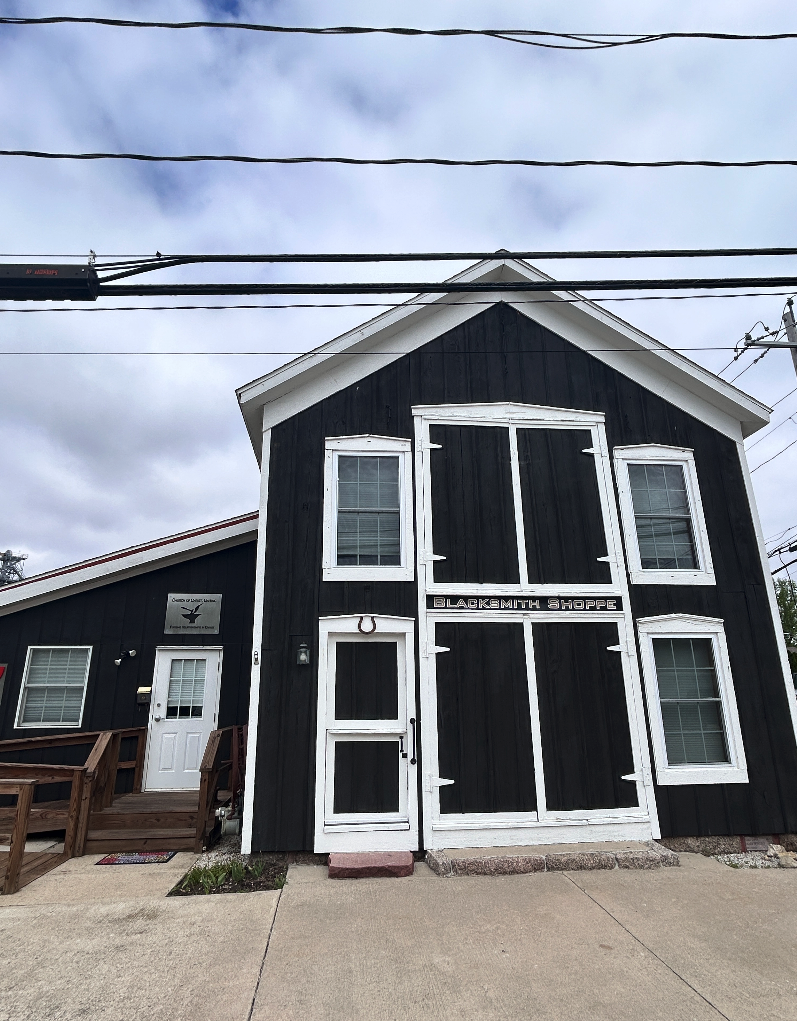
Before the automobile, the large local population of horses required frequent shoeing and the blades of early farm equipment needed sharpening, keeping blacksmiths busy for throughout the 19th century. Though the demand for the strike of a hot iron is gone, the “Blacksmith Shoppe” sign still greets traffic at 415 West Main Street.
Lexington's smithing begins with pioneer citizen Charles Tilbury, a Pennsylvania man and the very first blacksmith in town. Here he built a home and a log cabin workshop. In 1844 he fashioned the grappling hooks used to recover Albert Dodd, a promising young lawyer who drowned attempting to cross the Mackinaw River near Lexington. Tilbury himself died only six years later, in 1850, at the age of forty. The trade he brought with him would outlast him by more than a century and a half.
By the end of the 1850s, the blacksmithing trade was established in Lexington. The 1859 city directory lists a half-dozen blacksmiths working in town, and by 1866 new names appeared alongside them. Shops came and went over the decades that followed, but the anvil rarely went cold.
Bill Kauth, The KKK, and His Fishing Lures
The capstone of the Blacksmith Shoppe tells part of the story. It was built in 1870 and moved to its current location in 1903. In September 1904, W.J. (Bill) Kauth purchased R.F. Hewett's Blacksmith Shop on West Main, and here the legacy that continues today took shape.
The freshly married blacksmith spent the next twenty years shoeing horses, and building and fixing iron implements. As the industry changed, he responded with additional services and stayed in business. Despite many other shops coming and going, W.J. planted his feet firmly on West Main.
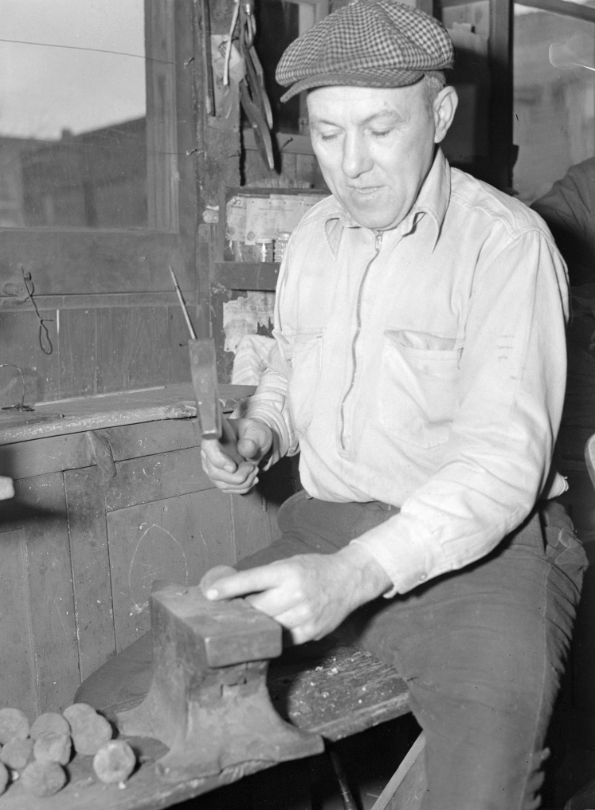
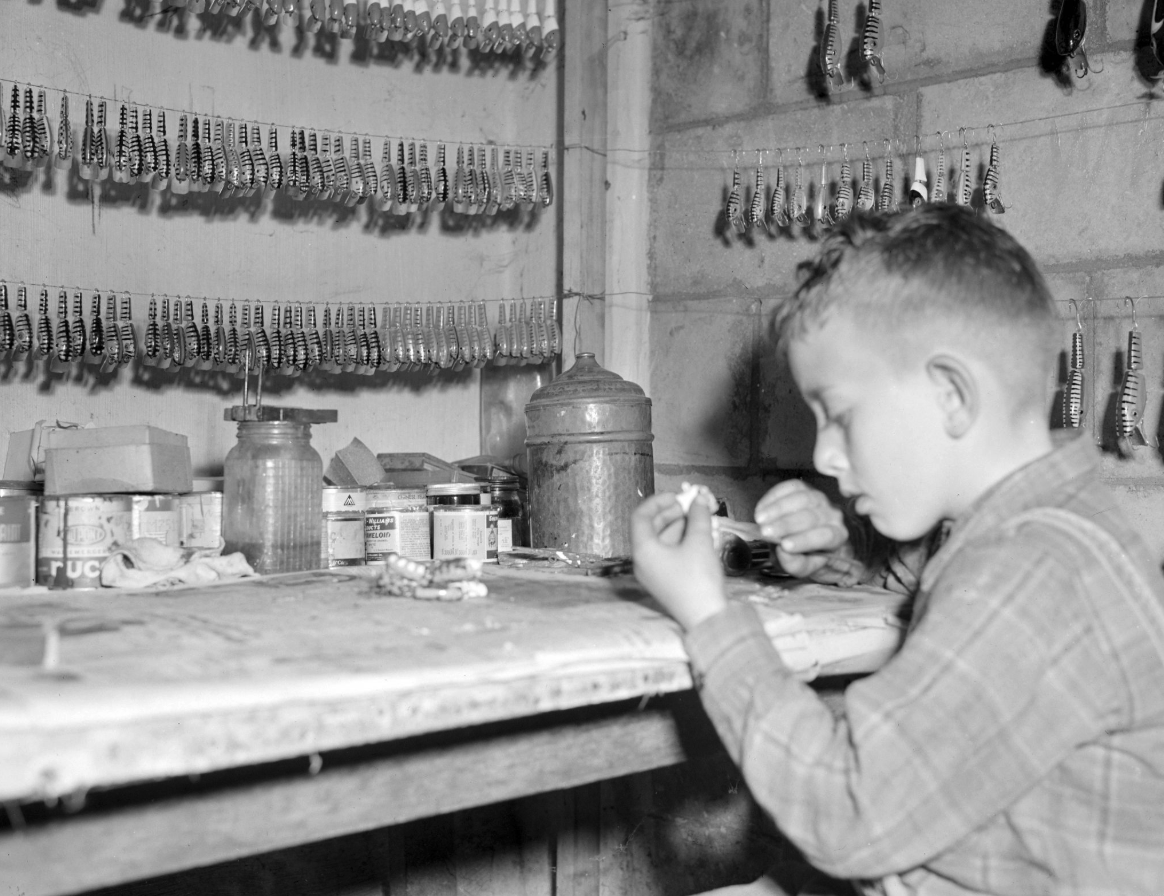
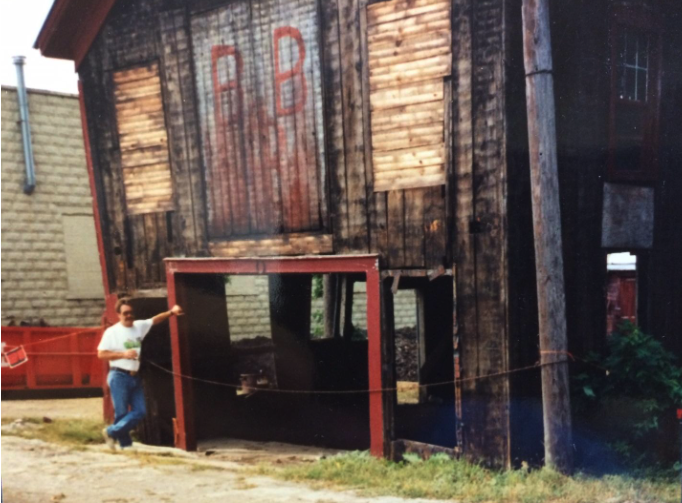
In the 1920s, Lexington was not untouched by the darker currents of the era. The Ku Klux Klan was active across McLean County, drawing participants from surrounding towns to ice cream socials, parade marches, and late evening gatherings where crosses were burned and new members inducted. In 1924, the Blacksmith Shoppe quietly became a site of resistance. Giant red letters reading "BBB" were painted across the front. Some said it stood for "Bad, Buzzards, Bastards." Others insisted it meant "Bigger Better Bass," a nod to W.J.'s other trade. He was a lure maker of some renown, the creator of the Illinois jointed river minnow, a slim-bodied jointed lure with a distinct wiggling action that was first used in Illinois rivers and later earned a national following. Kauth's minnow designs went through several stages of refinement, each carved by hand from walnut, the hardware hand-tooled, the bodies hand-painted.
The Road Arrives
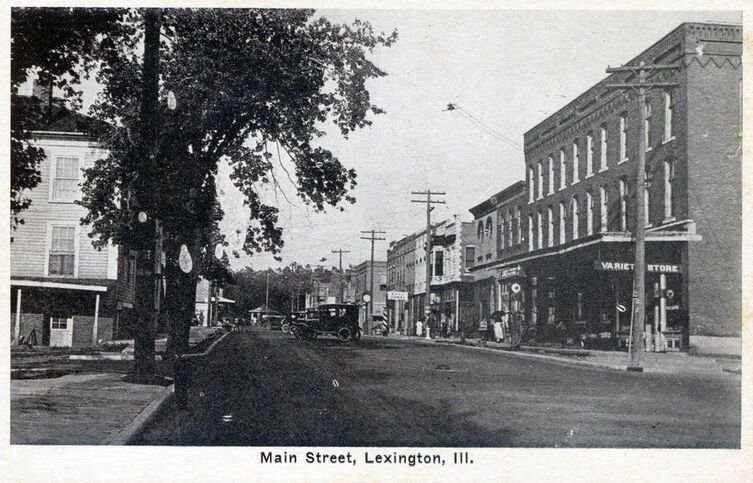
Two years later, in 1926, a new road came through town. U.S. Route 66 was commissioned that November, running from Chicago to Santa Monica, and its original Illinois alignment passed just north of downtown Lexington on what is now preserved as Memory Lane. The Blacksmith Shoppe, already more than fifty years old, was becoming symbol of the old ways, as the Mother Road was making way for the future of the automobile. For the next several decades, as horses gave way to Model Ts and Model Ts gave way to the Okies, the soldiers, the Sunday drivers, and the neon chasers. Despite as many as nine new auto garages in Lexington and no new blacksmiths, W.J. Kauth's forge kept working through it all.
In April 1935, a small item in the Lexington Unit-Journal caught W.J. at work in Pontiac, where the city street department had sent for him to shoe a team of Belgian horses named Barney and Buster. The pair were nine and ten years old and reportedly a bit frisky, and Pontiac's own blacksmiths had apparently declined the job. So the city called for W.J., who had been shoeing horses since the age of fourteen. He fitted the pair with new spring shoes for a busy season of street work, and Pontiac paid him twelve dollars for the job.
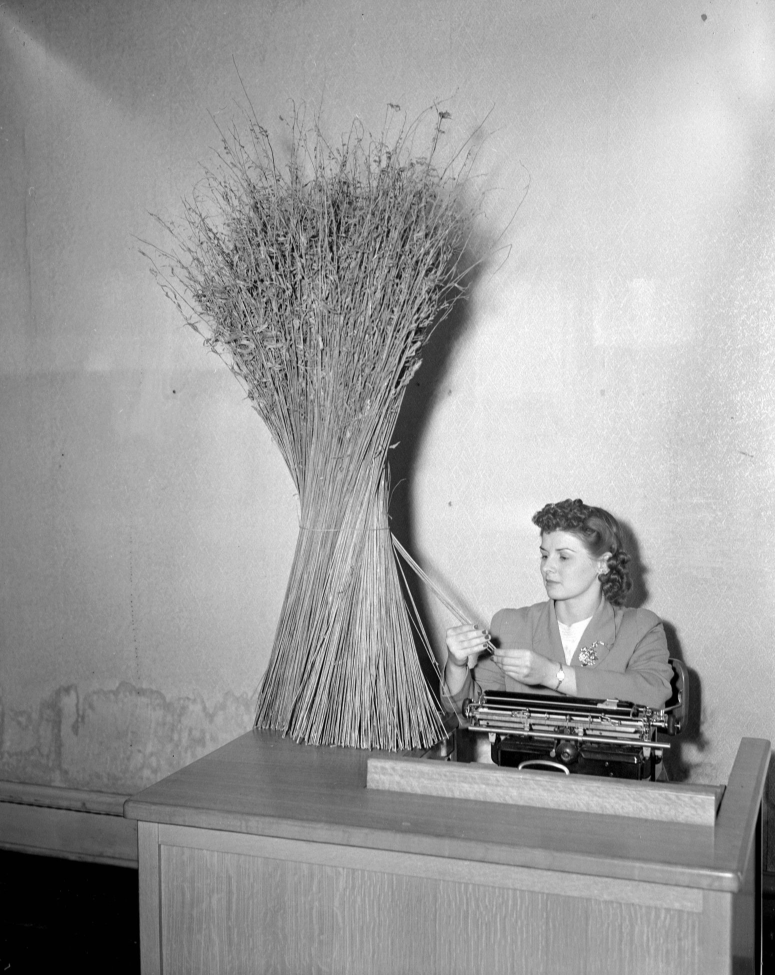
A Pantagraph piece titled “W.J. Kauth Blacksmith Shop a Busy Place” caught the season in full swing in the spring of 1943. The father and son were working side by side and the shop was humming. Corn planting was near, and the pair had been pointing plowshares and building up planter runners for weeks. They were kept busier by wartime rationing, which had farmers reconditioning old equipment more often than replacing it. W.J. had just repaired two hemp drills for local farmers who were preparing to plant the new war crop, as soon as the ground dried. A small Lexington shop was quietly stitched into a national effort of hemp growth.
Postwar to Present Day
By the mid-1940s, W.J. was sixty-seven and had been at the same location almost forty-three years. Most of his work was sharpening plows and welding, with a few saddle horses now and then. Through the winters he carved fishing plugs and sold them in the spring. As the years passed, he shifted toward tooling plows in the winter and catching up on his fishing in the summer, while Floyd took over much of the business, then known as Kauth Repair Shop. W.J. Kauth died in 1960, though the shop stayed open into the 1970s. Floyd Kauth died at home in 1977 at the age of seventy-three.
The following year, his widow Beryl sold the building to Joe Fese, who briefly operated as a blacksmith and welder. In 1980, the structure and its contents were sold at auction to Connie and Peter Bachman, who held the property through the decade that followed.
The property changed hands again in 1991, when it was sold to Charles A. Wright, who used it as an office. The structure was remodeled in 1993, and in 1999 it was rezoned to allow broader development.
In 2002, Wright sold the building to Donald and Constance Davis, who transformed a thirty-year hobby into a quaint antique shop in retirement. Connie also cut hair on-site a few days a week.
Three years later, the property was sold at auction to Dr. Dan and Patricia Scott. At the time it was described as a newly renovated twenty-by-thirty-foot building with additions, a second floor, a basement, and complete inventory. Antiques and other goods soon became available under new ownership with the help of MiMi Travers.
Dan and Patricia felt called to do something for the community, and in 2008 they generously gifted the building and its contents to the Church of Christ Uniting, which still holds it today. Five years later, the Illinois Education Association awarded Lexington CUSD #7 a SCORE grant, and for several years the building became home to a community fine arts center. Today the Shoppe hosts worship, holiday celebrations, concerts, art galleries, workshops, fundraisers, and community meetings.
Route 66 turns one hundred years old in 2026, and the buildings that saw it come and go are fewer every year. The Blacksmith Shoppe was already more than half a century old when the road was christened, and it has outlasted the road's retirement. Horses passed through first, then wagons, then the Okies, the soldiers, the Sunday drivers, the neon chasers. Each generation found a reason to open the door at 415 West Main and something waiting inside worth stopping for. One hundred and fifty-six years after the capstone was set, they still do.
Find All the Articles Around Town
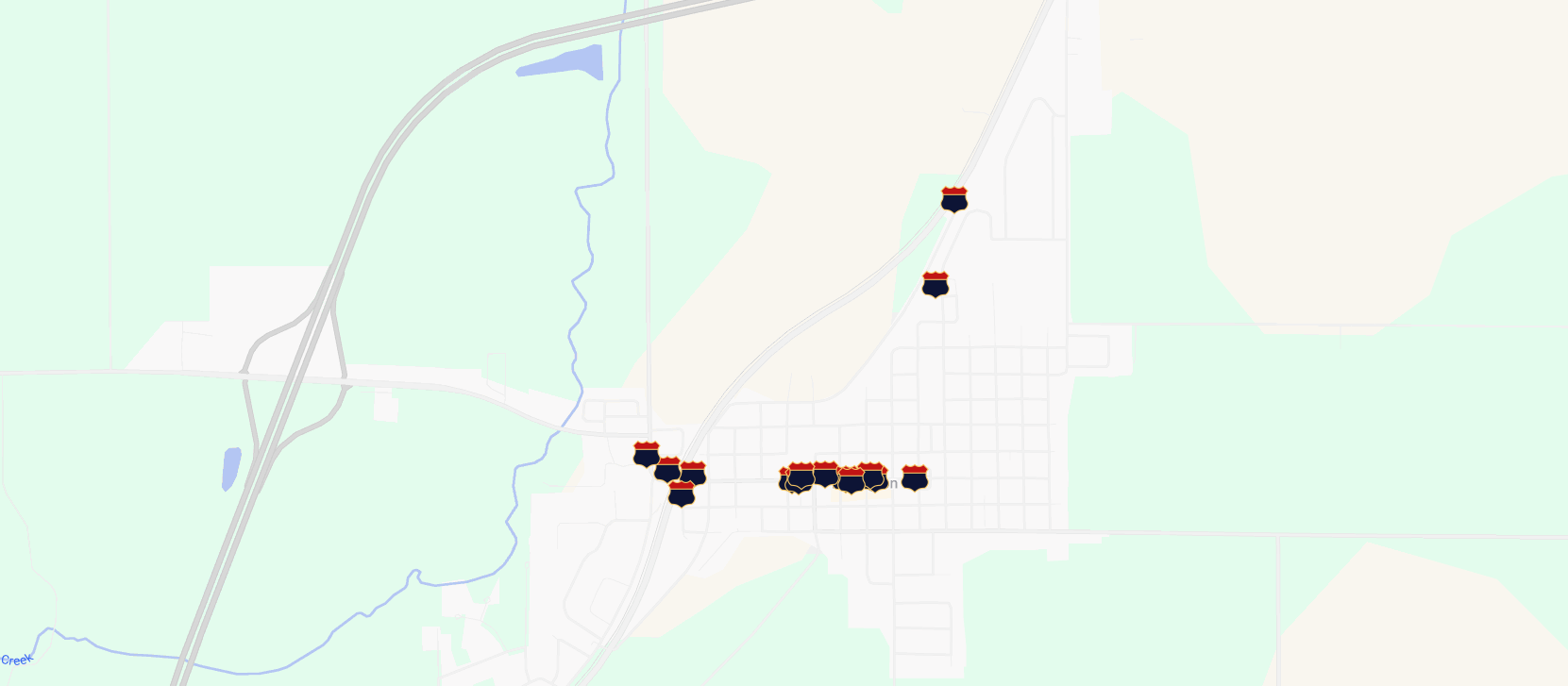
Click through the custom Google Map below to find all of the Lexington History Project signs and articles placed around town.
All Lexington History Project articles were written and edited by Nicholas Rynerson and Elizabeth MacPhail, with research and editorial contributions from THE FORT Historical and Genealogical Society in Lexington, Illinois.
A Note on Citations: All non-cited facts, dates, and addresses were provided from the archives of THE FORT Historical and Genealogical Society in Lexington, Illinois. For any additional information on specific town history, email THE FORT at thefortoflex@aol.com. For any suggested chronological changes regarding the information in this article please email nick@bolt-cutter.com.
Presidential Visits. Supreme Court Cases. Railroads. Route 66.
Established in 1836.