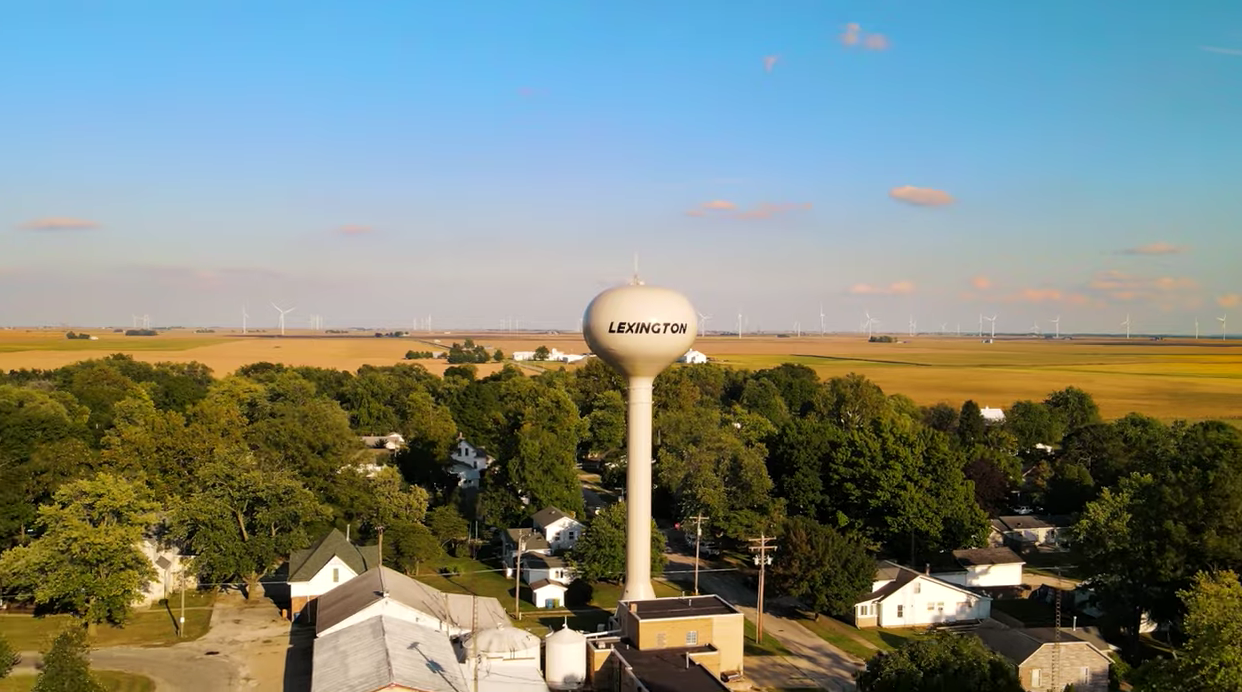
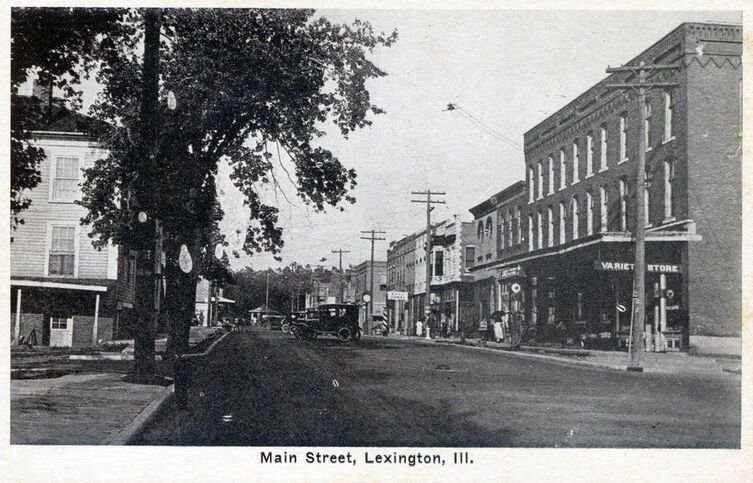

Close to Home: The Story of City Hall
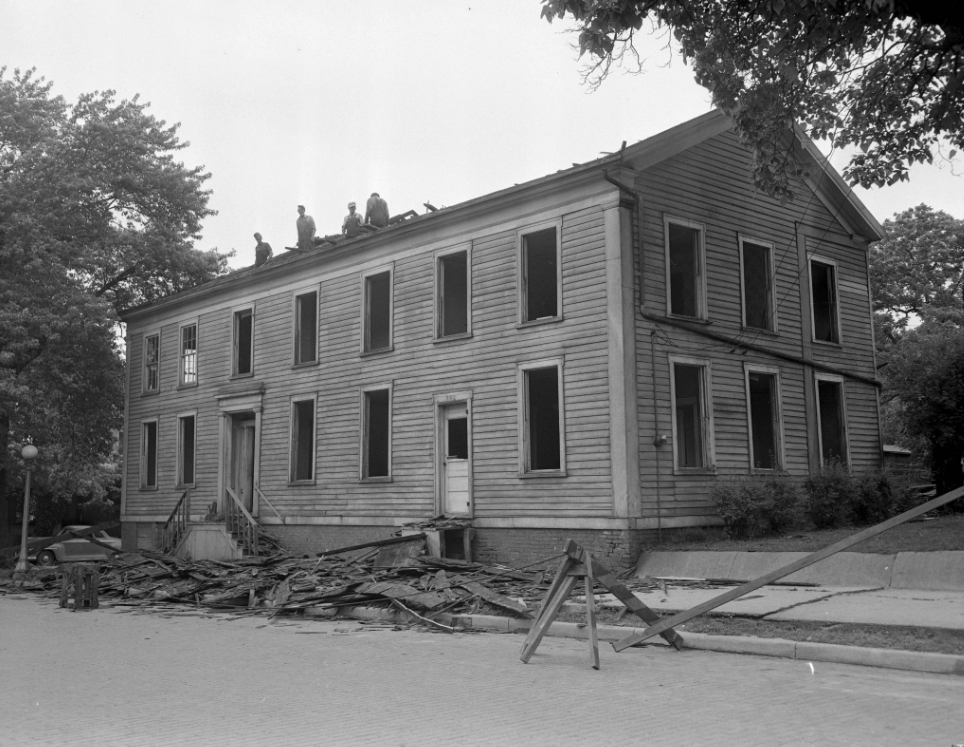
The Demolition of The Beehive, June 1949, Source: The Lexingtonian
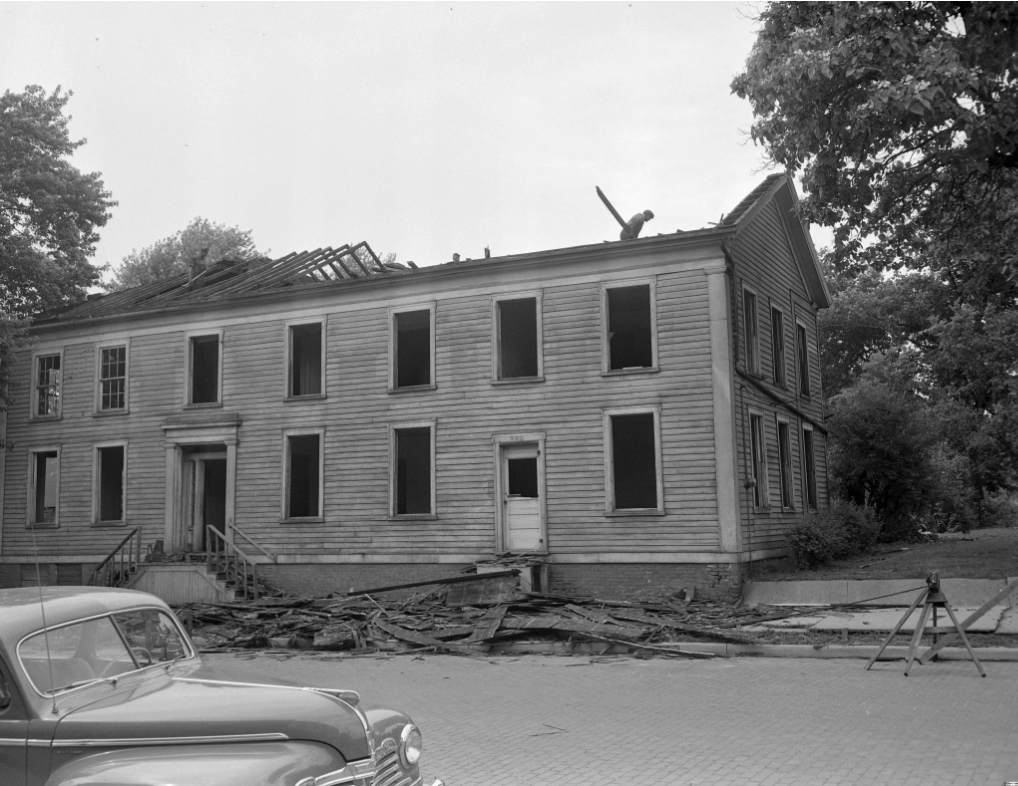
The Demolition of The Beehive, June 1949, Source: The Lexingtonian
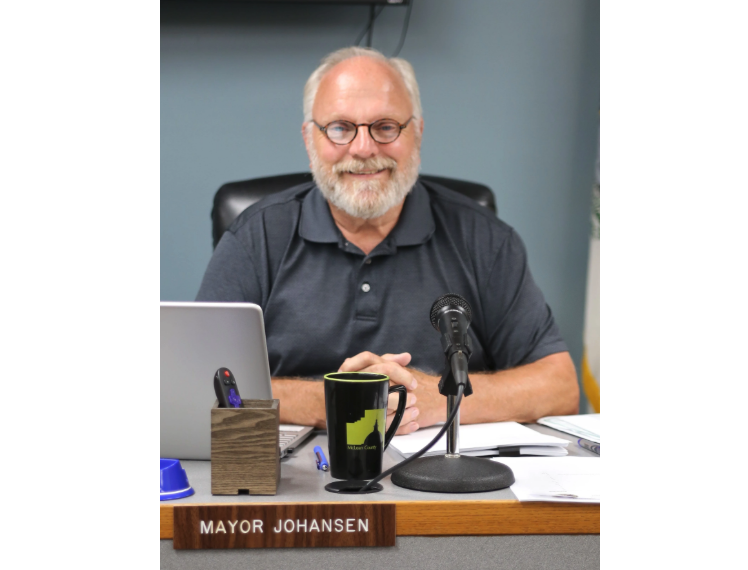
Mayor Spencer Johansen, source: Lexingtonil.gov
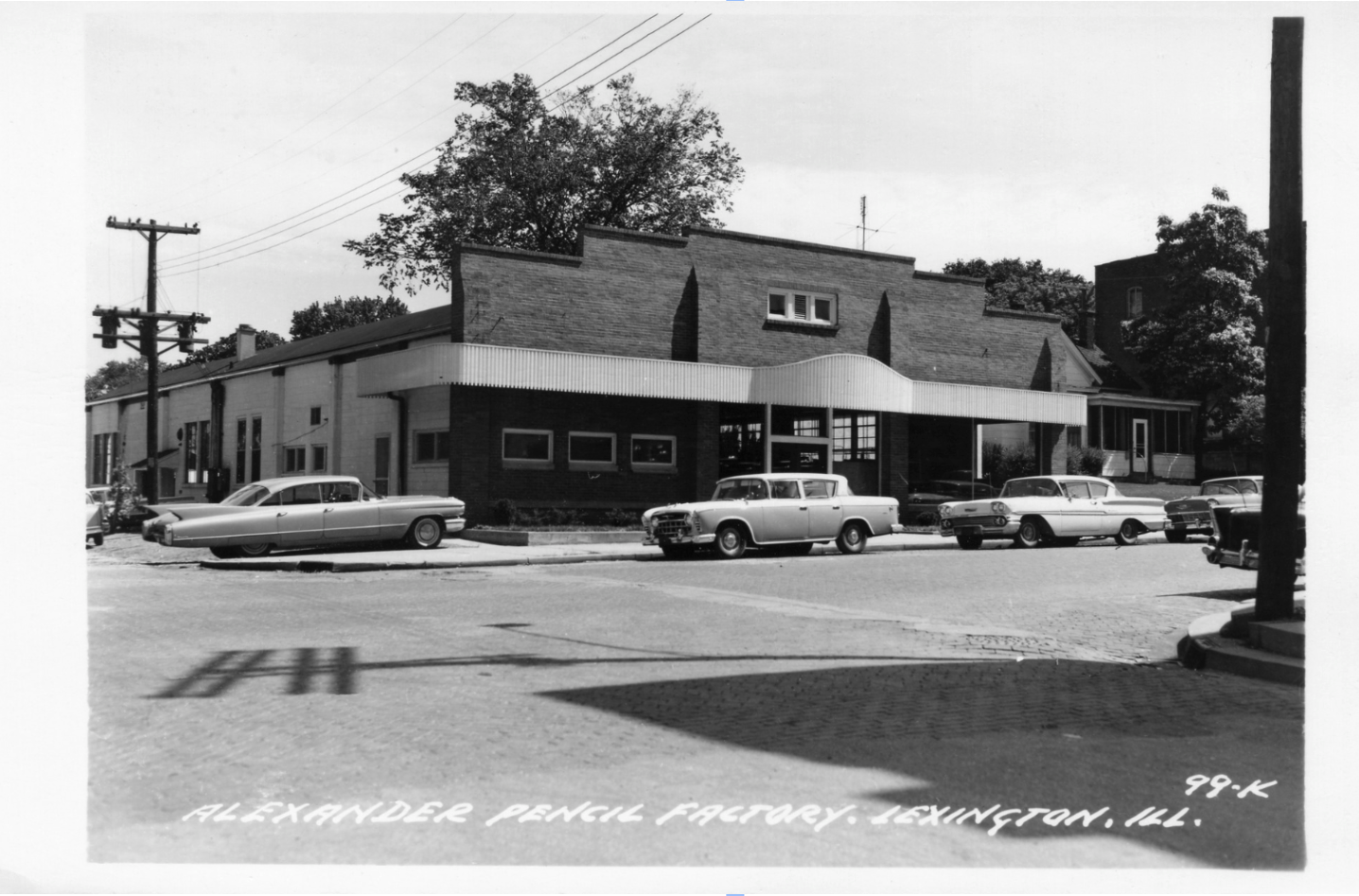
The Alexander Pencil Factory postcard, 1960s source: Facebook
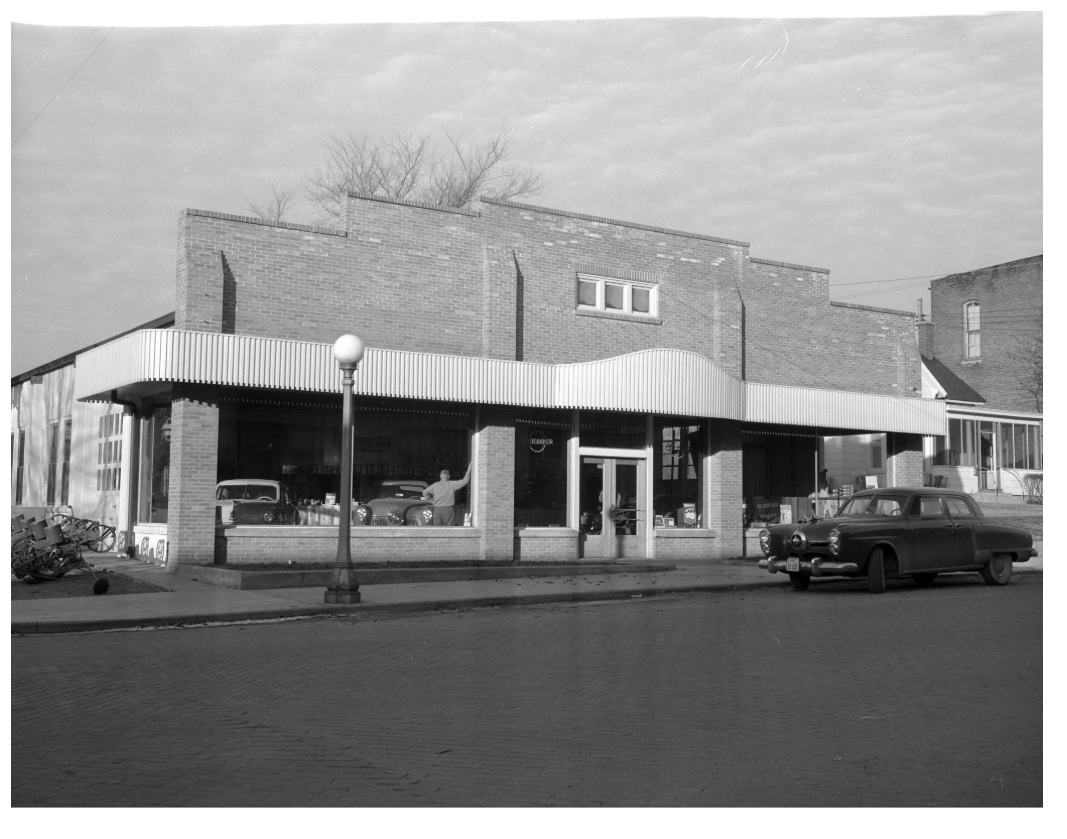
Douglass Mahan Studebaker Dealership, 1950s, source: The Lexigtonian
Close to Home: The Story of 329 W. Main Street and Lexington's City Hall
The Frank Feigl Municipal Building has served Lexington in many forms. Its story as a landmark of Lexington community life began long before anyone called it City Hall.
On a warm summer evening when diners are seated on the patio of Lexington Social, the local culinary hotspot housed in the old Train Depot, they can look across the street to see an inconspicuous brick building with glass doors. While most diners probably don’t go explore this property after dinner, the business conducted within has set the town in motion for almost 175 years.
329 W. Main Street is home to the Frank Feigl Municipal Building, Lexington’s City Hall. It’s the police station, mayor’s office, and municipal home of official Lexington business. But long before city business was conducted within its current walls, this address housed a pencil factory, apartments, a restaurant, and several businesses.
The Beehive
The story begins in 1850, with a two-story frame building on the northeast corner of Main and Vine to house the influx of railroad workers and officials arriving as the Chicago and Alton Railroad came through Lexington. For five years during construction of the line, the building served as home base for railroad officials. It would stand on that corner for nearly a century.
By the turn of the century, 329 W. Main was known as the Beehive, first as a department store and later as an apartment building buzzing with life.A 1930 newspaper note captured the flavor of those years, stating a resident simply listed as Miss Laura Gray was moving from her apartment at the Beehive to rooms above her brother's store down the street.
For over 30 years, the Beehive housed residents and businesses; a standout example of early 20th century mixed-use buildings. There were businesses on the first floor, apartments above, and even businesses operating out of the basement (“Hastings Sheet Metal Shop will take the place of Grubb’s Plumbing shop in the basement of the Beehive in February.” a local paper read in 1935).
A New Building
The Beehive era came to an end in June of 1949 when the old frame building was torn down after nearly a century on the corner. It was replaced by a new commercial structure; the building that still stands today. In the 45 years before it became City Hall, the building was first a Studebaker dealership and John Deere implement dealer in the early 1950s owned by Douglass Mahan. After the dealership era ended, the building was purchased by Alexander Manufacturing, who outfitted it as a manufacturing facility known as the Pencil Factory. It made pencils and other pencil-like things. Alexander Manufacturing moved their pencil making operations down the road to Towanda in 1990 after a chemical fire.
New Life as City Hall
In 1994, the city purchased the building and gave it a new purpose and a new name: the Frank Feigl Municipal Building. In all the years since the corner was first developed in 1850, only two physical structures have stood on this ground, a rare and remarkable thread of continuity through boom times and hard times alike.
Frank Feigl: The Namesake of Lexington's City Hall
In July 2005, as part of the Lexington Sesquicentennial, Lexington City Hall was officially named “The Frank J. Feigl Municipal Building” in honor of former Mayor Frank J. Feigl.
Frank Feigl was mayor of Lexington for approximately 20 years, from 1985 until 2005. Feigl was not a Lexington native, but a later-in-life transplant born in Chicago in 1927. He moved to Bloomington in the 1960s to work with the IAA and then moved to Lexington in 1978, quickly getting involved in civic life. By 1983, five years after moving to town, he was voted into the Lexington City Council by a write-in vote. Two years later, he was elected mayor of Lexington and quickly became known for his personal touch and accessibility as mayor. Feigl would accept walk-in bill payments at the City Hall entrance and personally take them to the collector's desk; these little tasks were not part of the Mayor's official job description, but that didn’t stop him.
As Frank Feigl’s tenure went on, he developed strong connections locally and at the county level. In the early 1990s, he helped form the Mclean County Mayor’s Association and served as its first chairman. In 2003, the McLean County Mayor's Association created the Mayor Frank Feigl Person of the Year Award and named Frank its first recipient. Along with serving as Lexington’s mayor for twenty years, Feigl was heavily involved in other areas of public service and life, from working with McLean County’s Economic Development Council to serving on the United Way board of directors.
While Frank Feigl was a pillar of the local community, he was down-to-earth and unassuming about his role in public life. At the City Hall dedication, Feigl’s remarks were humble and straightforward:
“I am so thrilled and very honored to have City Hall named after me. Not many people can say they have a building named after them.”
In fact, Frank and his wife Toy attended the dedication but did not know the City Hall ceremony was for him. “We attended each dedication that morning,” Toy Feigl told the Lexingtonian, “but we didn't [know] the City Hall Dedication was for Frank.” [4]
Frank J. Feigl died on October 26, 2009, and is buried at Lexington Cemetery, leaving behind a legacy of service and community-mindedness as mayor that has carried on and become the standard for Lexington public officials.
The Current Administration
Today, Mayor Spencer Johansen and his team embody the spirit of Frank Feigl’s commitment to public service. A retired Lexington police chief, Johansen came to the mayor's office with decades of service already behind him, and no intention of slowing down. During a period when many small towns pulled back, Mayor Johansen was out actively courting new businesses, personally working to bring investment and opportunity to Lexington even through the challenges of the COVID-19 pandemic. His hands-on approach has been a catalyst for the resurgence of business and development that Lexington has experienced in recent years. He is the kind of mayor who shows up, and it has made a measurable difference.
Keeping the day-to-day work of city business organized and on track is City Clerk Star Torkelson, Mayor Johansen's essential partner in civic operations. Star coordinates events like Lexington’s Christmas on the Prairie and Red Carpet Corridor Weekend, oversees the Lexington History Project and other committees, manages the daily tasks of city life, and ensures that the work of local government actually gets done with the kind of behind-the-scenes dedication that makes a small city run well. Additional staff information and city services are available at LexingtonIL.gov.
City Hall at 329 W. Main is open to residents Monday through Friday, 8:30 a.m. to 4:00 p.m., and it reflects a style of local government that has always suited a small city like Lexington: accessible, personal, and rooted in genuine community service.
From railroad housing to business, dealership floor to factory, and storefront to seat of government, 329 W. Main has participated in every element of Lexington city life. Maybe the building’s experience, along with the city employees’ experience, has helped fuel the meaningful work that continues to happen every week at City Hall.
For more information about city services, staff, events, and resources, visit LexingtonIL.gov.
Sources
The Pantagraph (Bloomington, Illinois), Monday, August 25, 2003, p. 33 — “Small town suits mayor fine — Lexington finds loyal resident in Frank Feigl,” by Bob Holliday, photograph by David Proeber.
The Pantagraph, Thursday, March 28, 1985, p. 18 — 1985 Consolidated Election sample ballot, City of Lexington.
The Pantagraph, Wednesday, April 3, 1985, p. 4 — Election returns, City of Lexington (Mayor and City Council).
The Lexingtonian (Lexington, Illinois), Thursday, July 28, 2005, p. 1 — “City Hall named Frank Feigl Municipal Building.”
The Pantagraph, Wednesday, October 28, 2009, p. 26 — Obituary of Frank J. Feigl, Central Illinois Obituaries section.
The Pantagraph, Tuesday, August 24, 1982, p. 28 — Obituary of Frank Feigl Sr.
Like this article? Download a PDF
All Lexington History Project articles were written and edited by Nicholas Rynerson and Elizabeth MacPhail, with research and editorial contributions from THE FORT Historical and Genealogical Society in Lexington, Illinois.
A Note on Citations: All non-cited facts, dates, and addresses were provided from the archives of THE FORT Historical and Genealogical Society in Lexington, Illinois. For any additional information on specific town history, email THE FORT at thefortoflex@aol.com. For any suggested chronological changes regarding the information in this article please email nick@bolt-cutter.com.
Find All the Articles Around Town
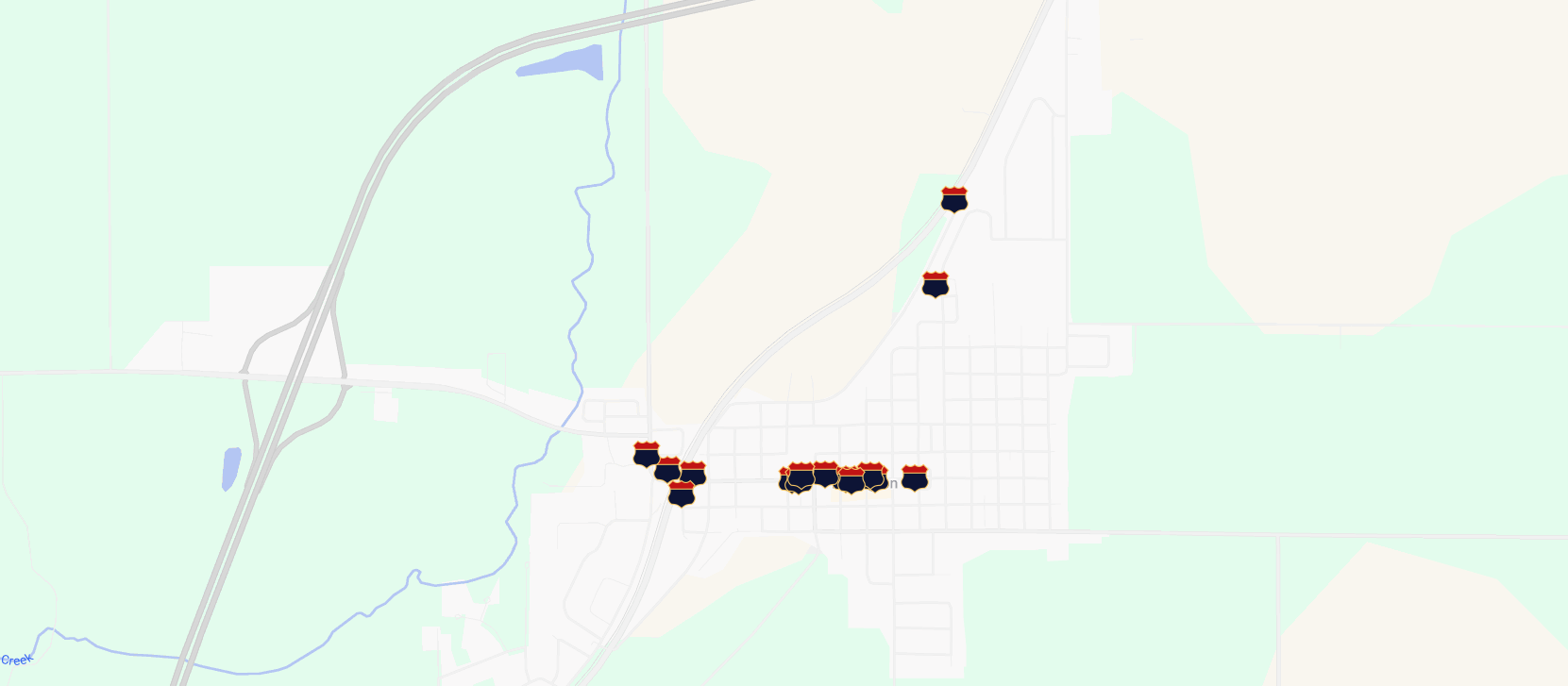
Click through the custom Google Map below to find all of the Lexington History Project signs and articles placed around town.
Presidential Visits. Supreme Court Cases. Railroads. Route 66.
Established in 1836.