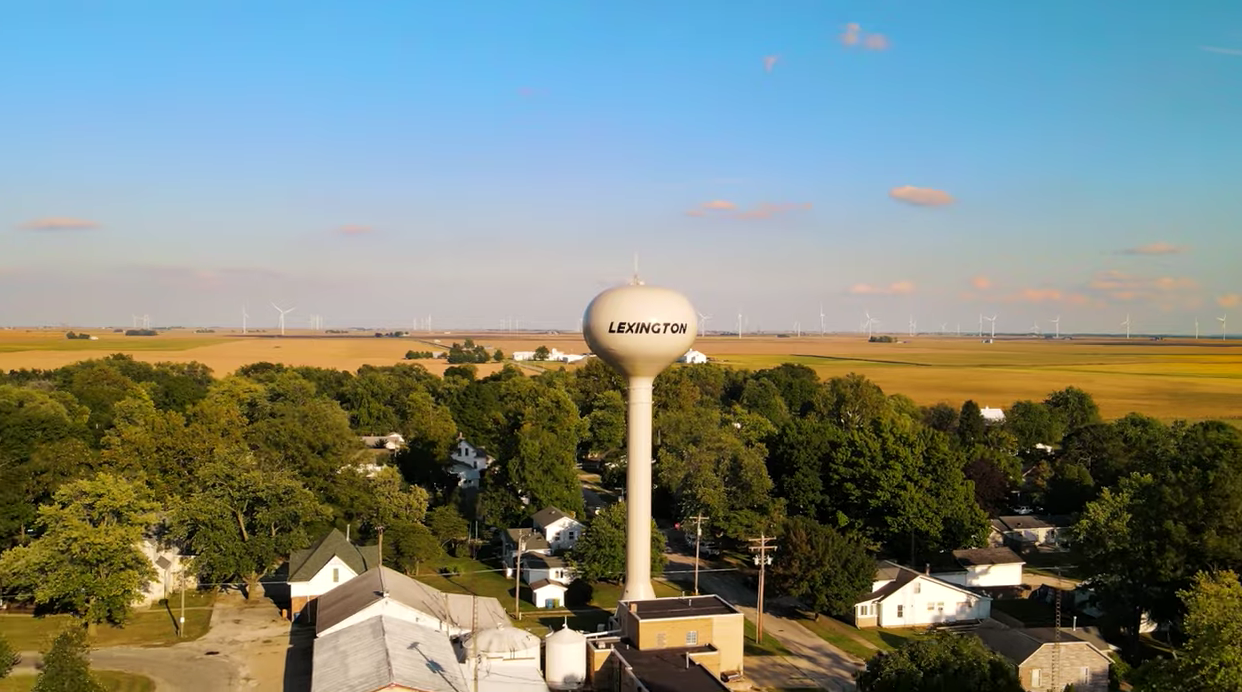
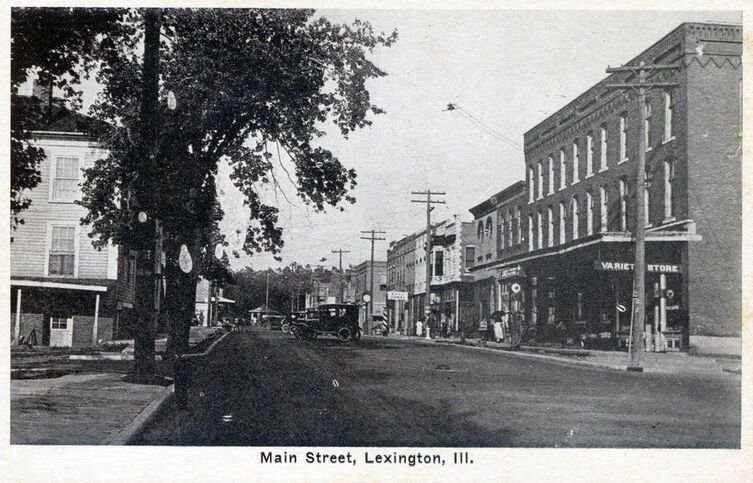

American Standard & American Eagle:
The Elephant on 66 and the Eagle on Main Street

The Elephant and the Eagle: Kasey Wells and the Art of Industry
The Elephant
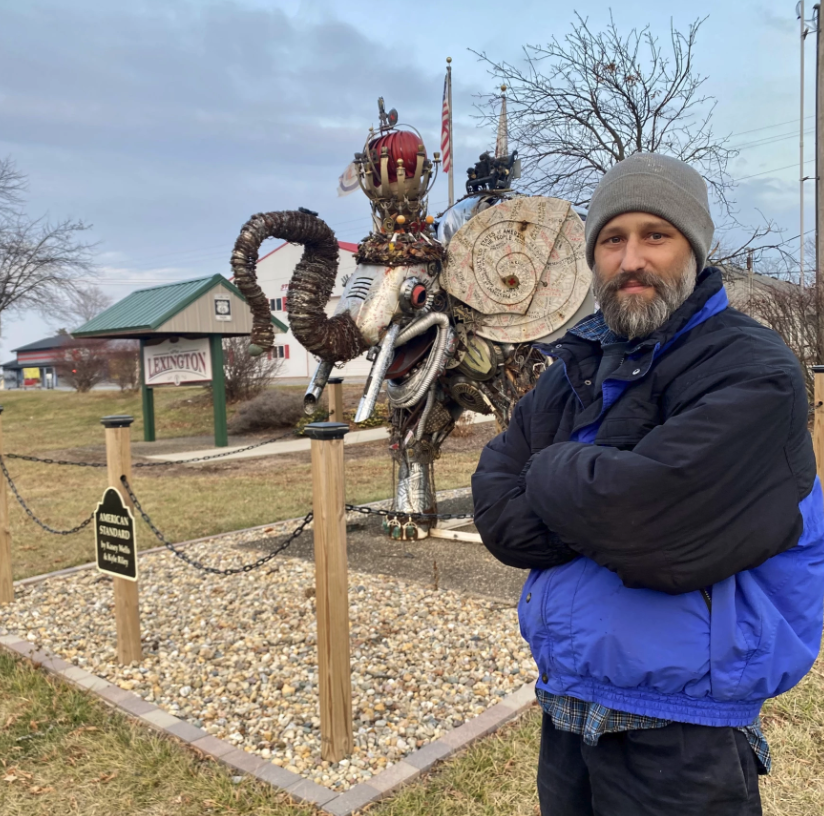
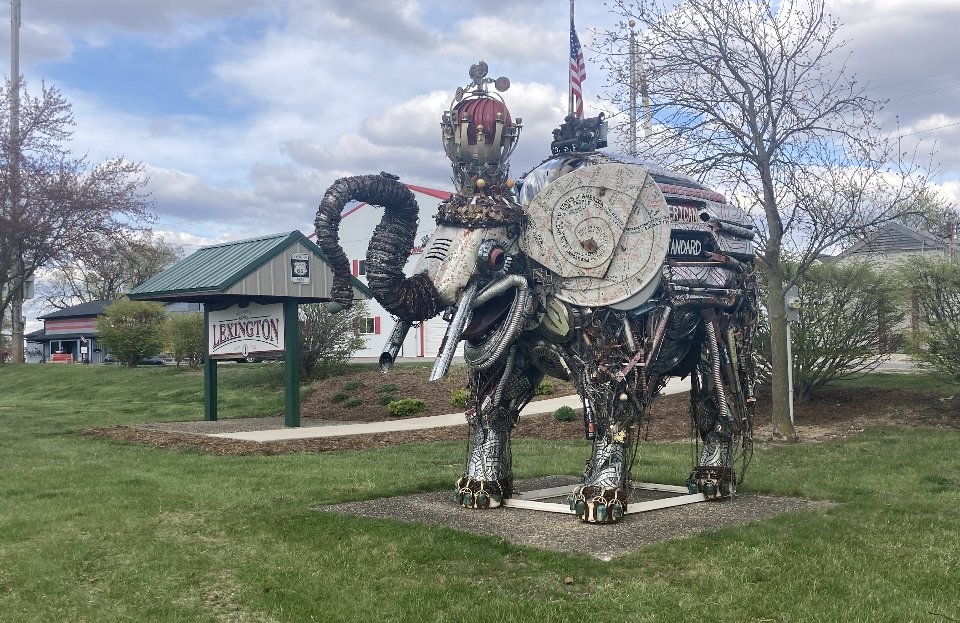
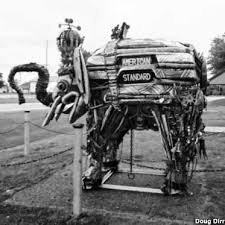
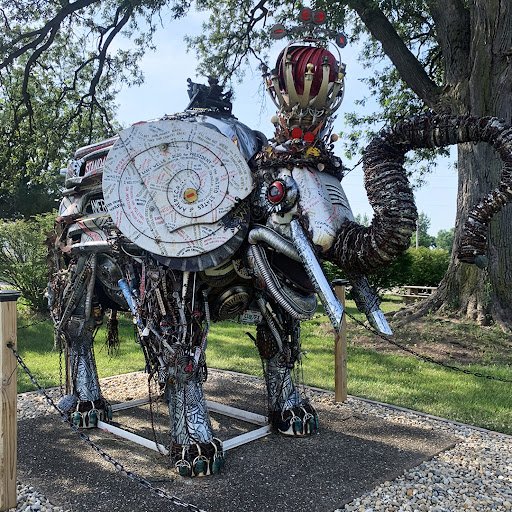
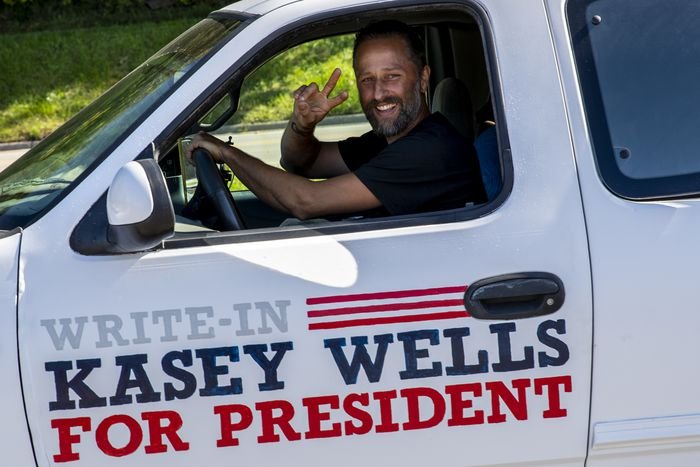
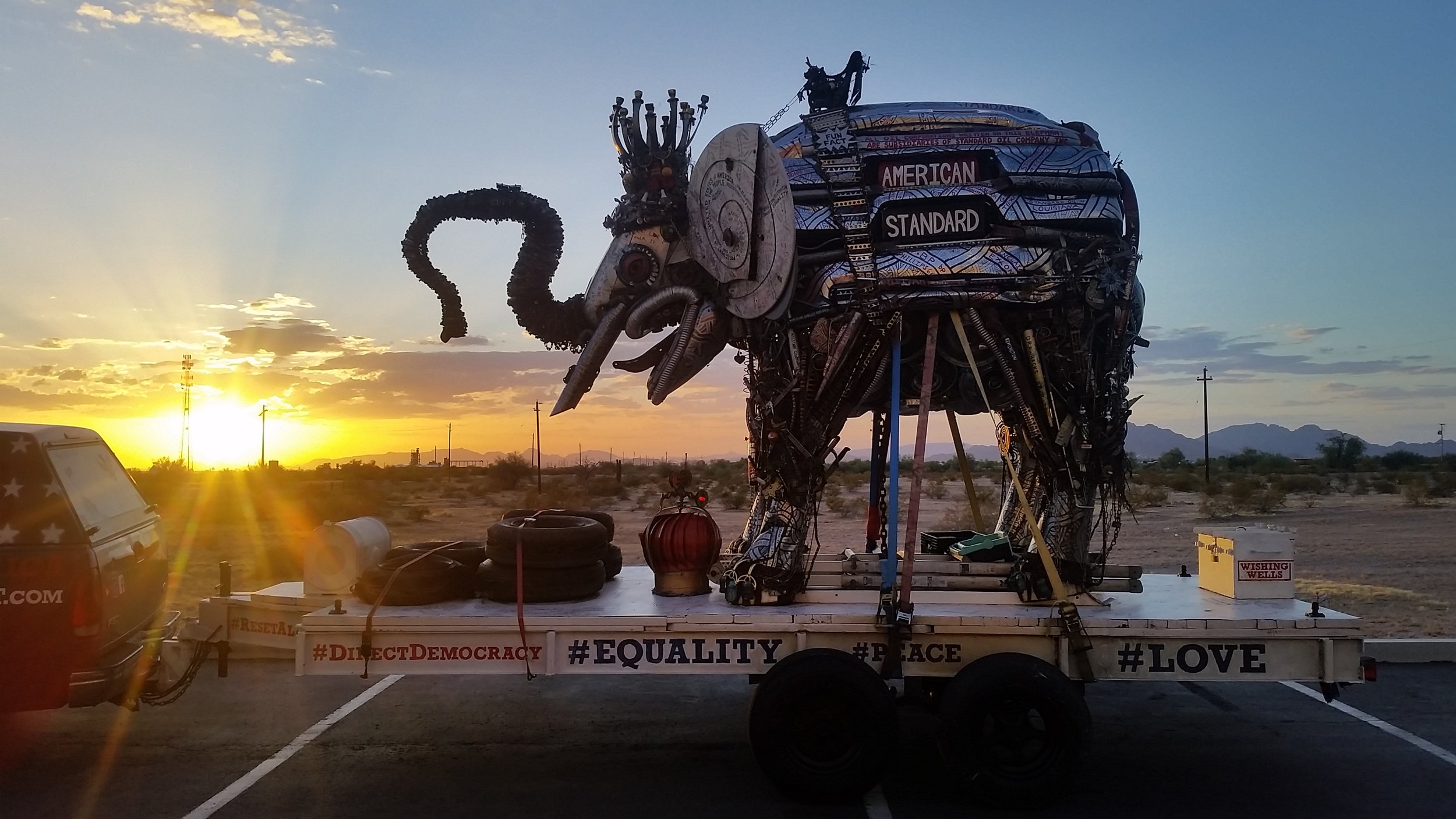
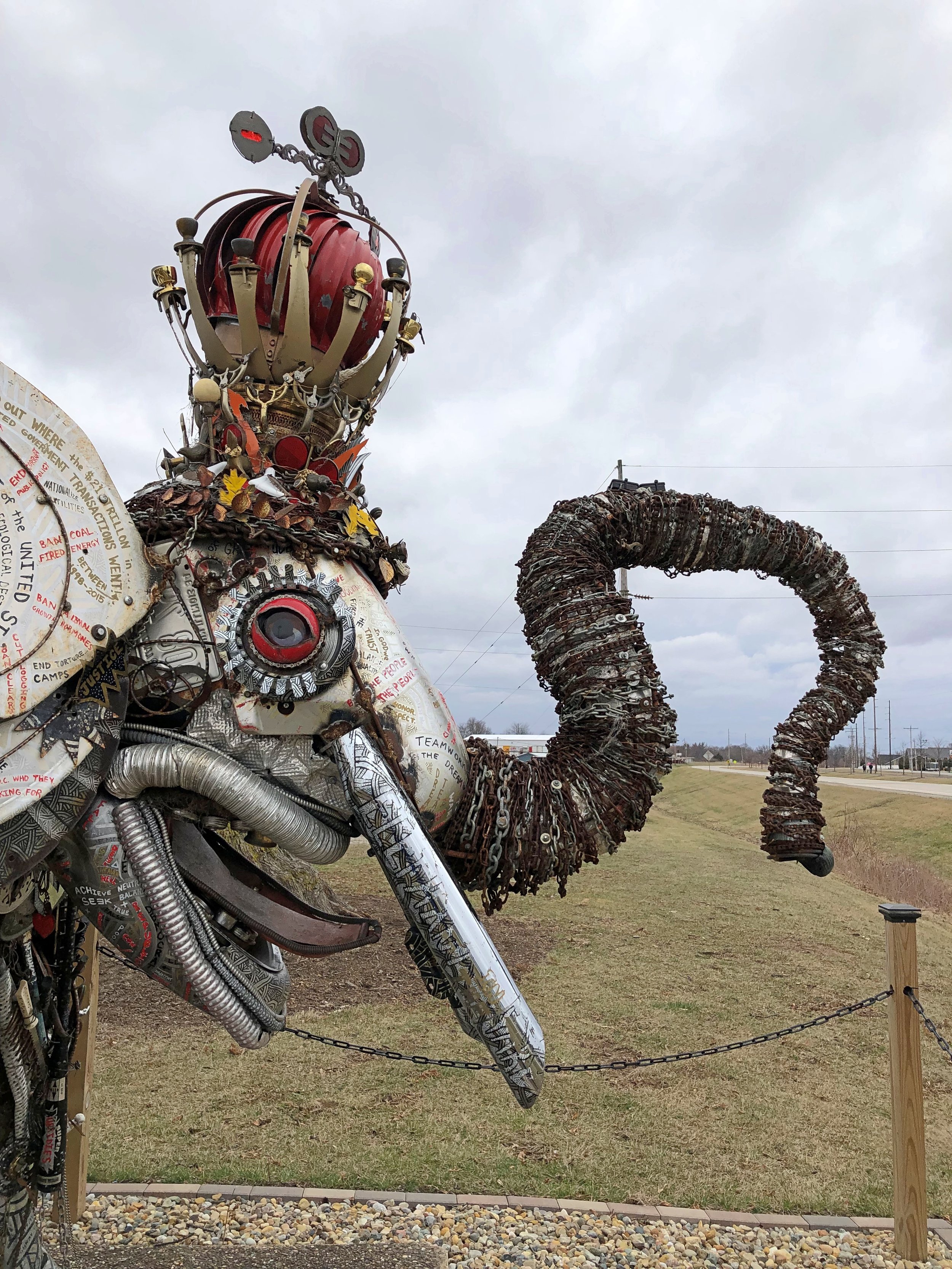
Just off Old Route 66, as you roll into Lexington, something unusual greets you. A towering 11-foot elephant made of scrap metal, crowned in red, white, and blue. The elephant is covered in symbols, language, familiar and unfamiliar little pieces of mechanical life, all molded into something greater than the sum of its parts. The elephant has a name: American Standard. It’s a monumental sculpture dripping with social commentary from Lexington artist and 2020 presidential write-in candidate, Kasey Wells.
With its rusted textures, golden crown, and campaign slogans scrawled across salvaged hubcaps and oil tanks, American Standard stands as a bold statement: part social commentary, part public art, part local legend.
The Eagle
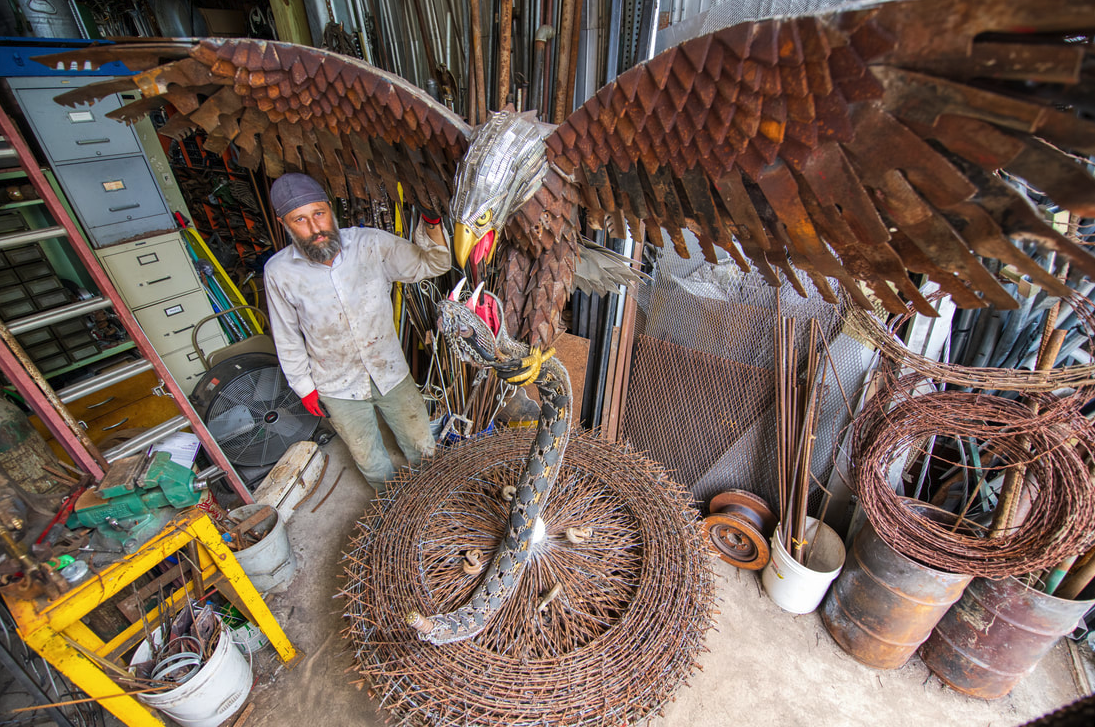
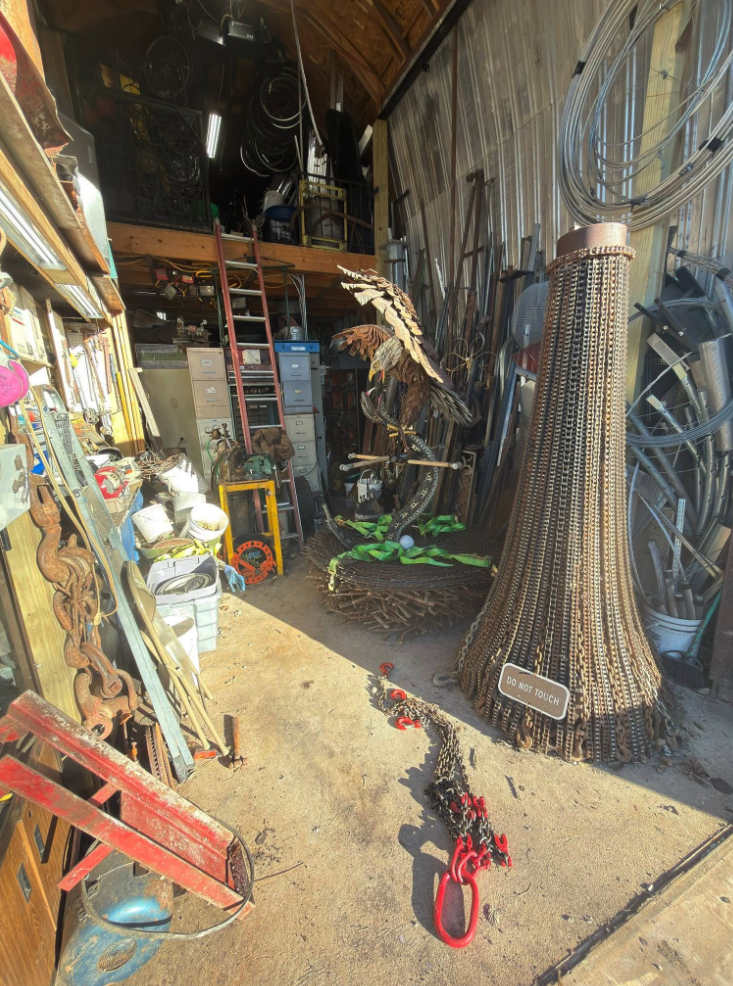
As you make your way down Main Street, just east of Kemp’s Upper Tap, you’ll find another towering industrial sculpture presiding over the business district. On a dais of mused metal chains cresting upwards is the fierce eagle, clutching a metal serpent. American Eagle, Lexington’s newest public art installation in Patton Park on Main Street, has found its home.
American Standard On The Move
Wells built American Standard (the Elephant) with fellow artist Kyle Riley in Chicago and towed it thousands of miles across the country during his unconventional presidential run. Tired of waiting for politicians to speak his mind, Wells decided to become one himself.
“I thought, I can’t just sit around and wait for some other politician to voice all the things I’m seeing that I’m concerned about,” he said. “I decided to be the change I want to see in the world.”
And so, with nothing but determination and Google to guide him, Wells launched a campaign with American Standard as both soapbox and sculpture. Its crown, painted with “Standard Oil,” was a not-so-subtle critique of corporate power and fossil fuel dependency—two pillars he pledged to dismantle.
Before its permanent parking place at the corner of Route 66 and Main Street in Lexington, the elephant traveled the nation as a mobile monument. It sparked conversations at gas stations, rallies, and roadside stops, inviting passersby to engage with Wells’ ideas on divesting from oil, reforming the Federal Reserve, and ending America’s endless wars.
Wells didn’t expect to win, but he wanted to spread awareness, and art was his method.
The sculpture itself helped fund part of his journey. In Lenoir, North Carolina, American Standard won both Best in Show and People’s Choice in a sculpture competition. After the election, the elephant rested in Wells’ yard until the city of Lexington helped it find a permanent public home on Route 66.
An American Eagle on Main Street
Wells built the fierce, towering American Eagle at the urging of Mayor Spencer Johansen, who wanted to see an eagle statue living at Patton Park on Main Street.
Kasey Wells was up to the task, and in 2022 he got to work. When it was finished, Wells submitted the sculpture to ArtPrize, the world's largest art competition. The sculpture was a hit and won first place. Built with salvaged industrial materials, it comes to life with the intensity of its subject matter: a bald eagle and a rattlesnake. The symbolism speaks for itself and has struck a chord with the local community. The city worked to procure a grant to purchase the award-winning sculpture from Wells, and in February 2026 American Eagle was moved to its forever home in Patton Park.
Honest Art in the Heartland
Buildings come and go, and in the 170+ year history of Lexington, building materials have come in and out of fashion. Early homes were built from timber cut from virgin forests: strong oak, maple, and pine that were allowed to mature in leisure. Local quarries cut limestone in limited quantities. As the Industrial Revolution kicked into gear and the railroad made its way through Lexington, timber, stone, and metal from around the country made their way to town and made building just a little bit easier. Then the 20th century brought more steel, more iron, and new plastics. Buildings were torn down and rebuilt as industry progressed. Sometimes, the old materials survived and carried their weight into the new world, but too often the old materials were discarded. Old cars rusted. Old buildings were scrapped.
Generations of Lexingonians watched this transition into the modern world in real time. And like every society that’s ever lived upon the earth, the community’s artists recorded what was happening.
Kasey Wells has opinions, as any honest artist does. He also has a vision and uses his artistic mind and skills to create art that tells the stories of changing life in Lexington. “American Eagle is meant to be a symbol of America/We the People being attacked by venomous forces and fighting for survival.” Wells says of the sculpture on his website.
The scrap he uses in his art is the waste of a rapidly changing world that was built on a backbone of metal.
“American Eagle is made of farm implement shanks, rotors, barbell weights, window weights, leaf springs, chains, sickle sections, mower blades, watch bands, fan blades, barbed wire, rebar, a semi brake drum, pipe…and a little paint.”
The heavy, tough metal that built the postwar boom has largely been replaced by plastics, but the art of Kasey Wells wont let us forget the world and the ideas that built Lexington.
You can visit American Standard at the intersection of Old Route 66 and Main Street in Lexington and American Eagle at Patton Park on West Main Street.
Find All the Articles Around Town
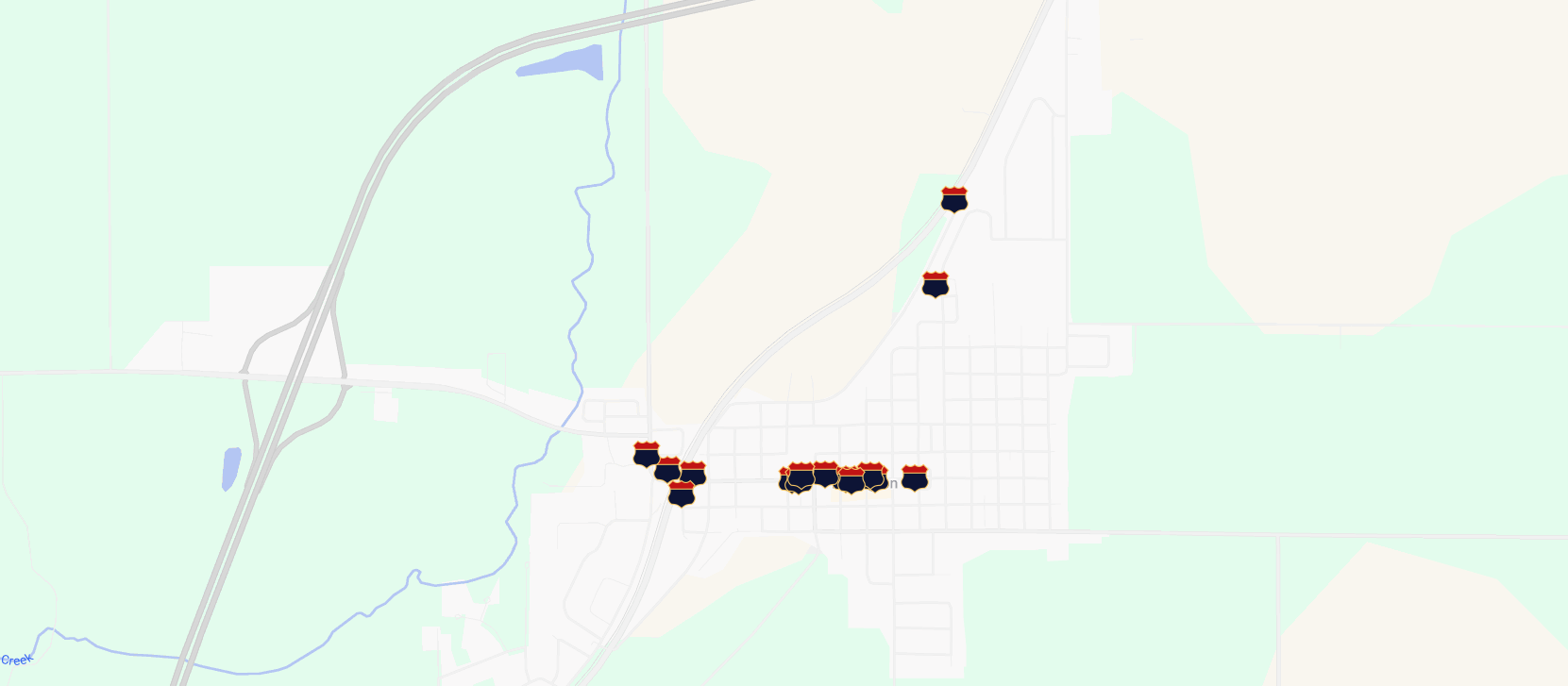
Click through the custom Google Map below to find all of the Lexington History Project signs and articles placed around town.
Presidential Visits. Supreme Court Cases. Railroads. Route 66.
Established in 1836.