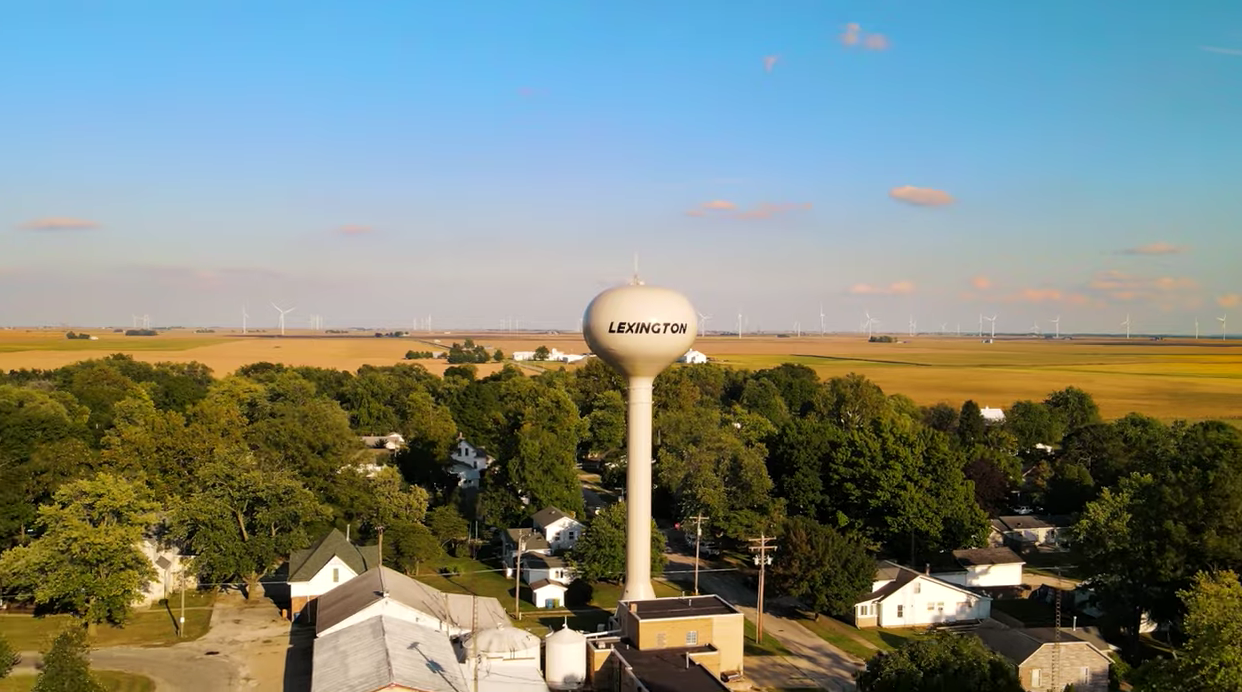
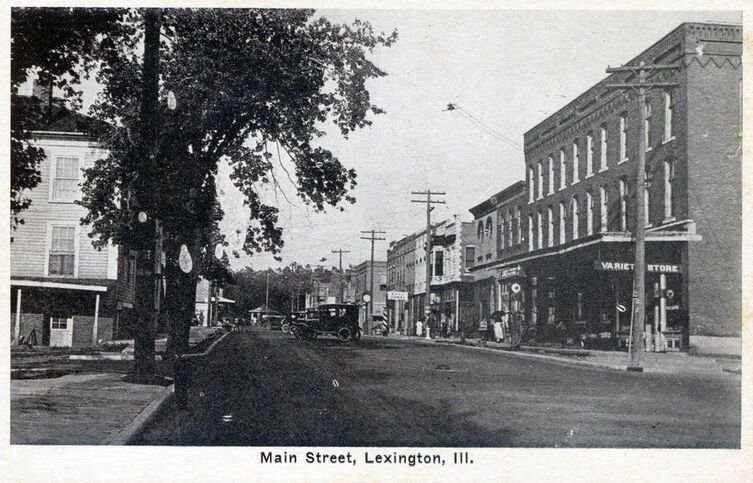

The Fort
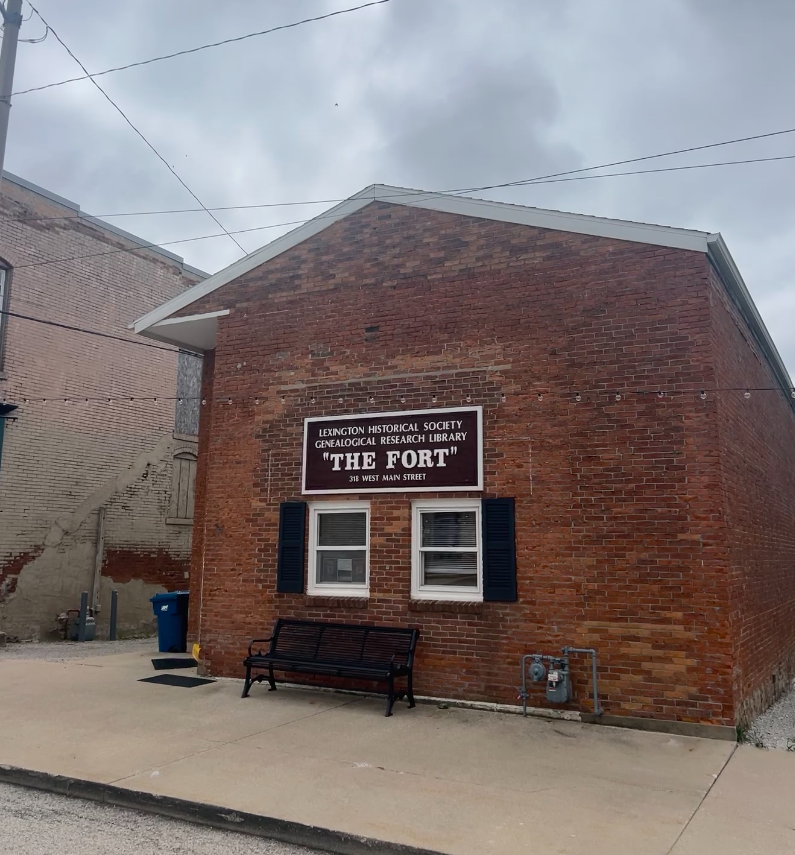
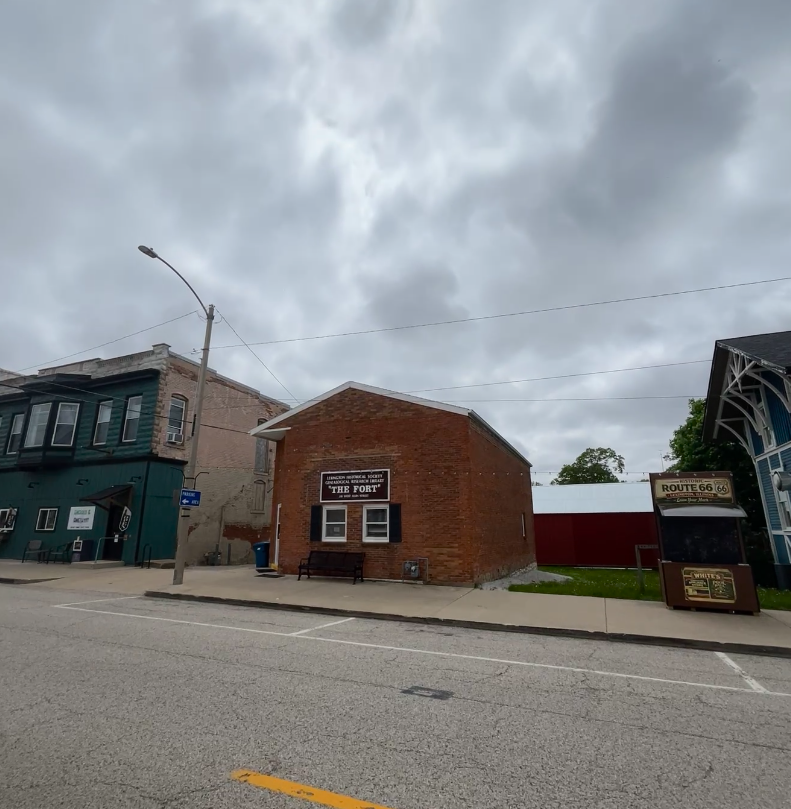
THE FORT, Circa April 2026, Source: Nicholas Rynerson
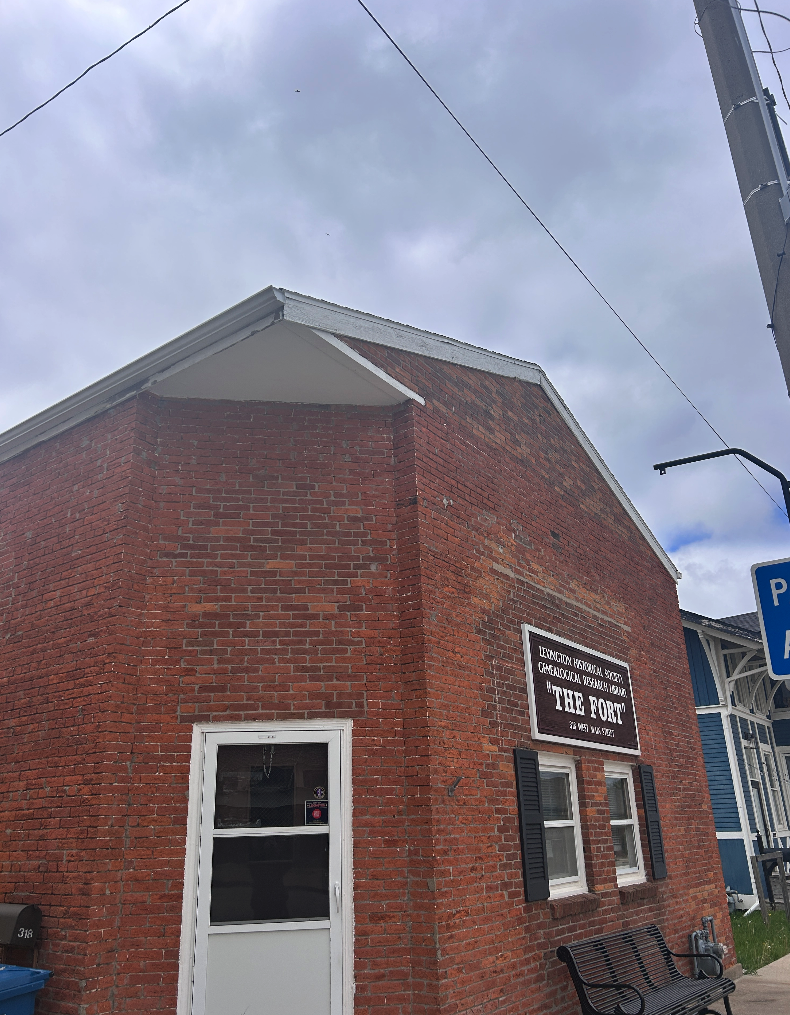
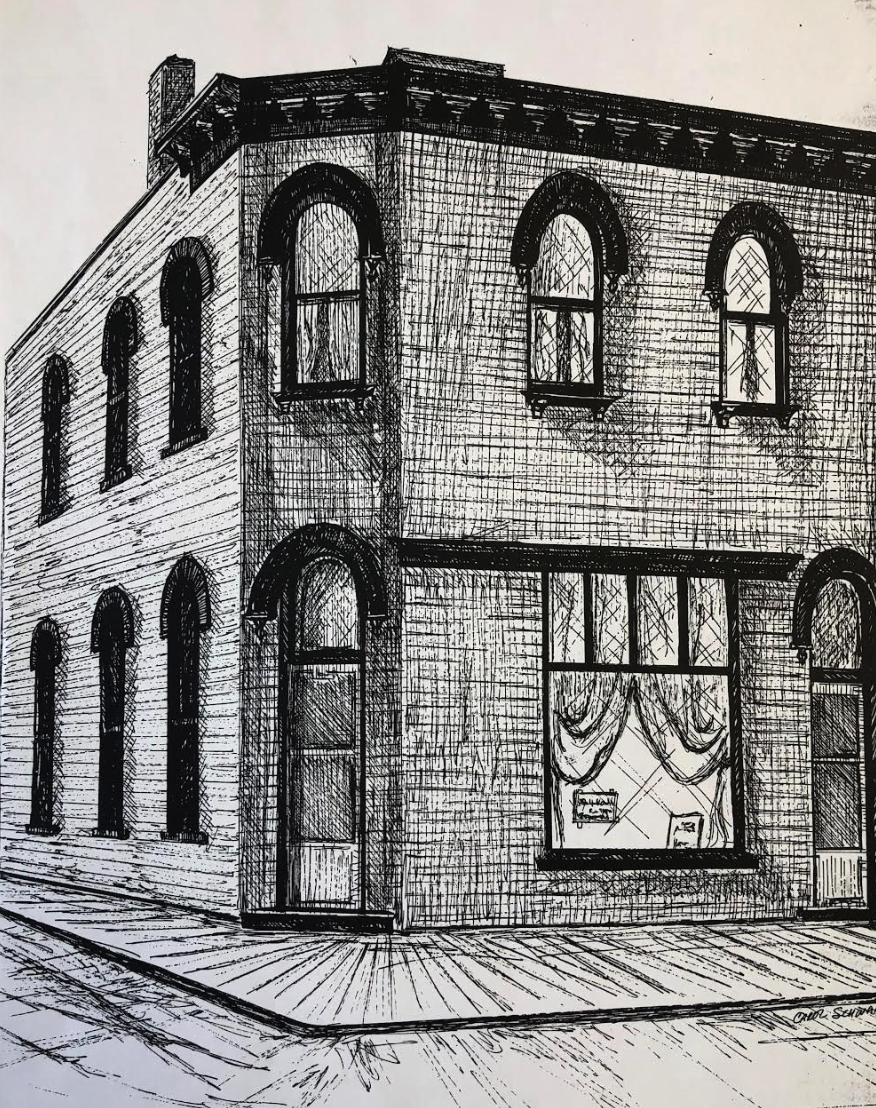
Drawing of FORT Building Before the Fire, Source: THE FORT
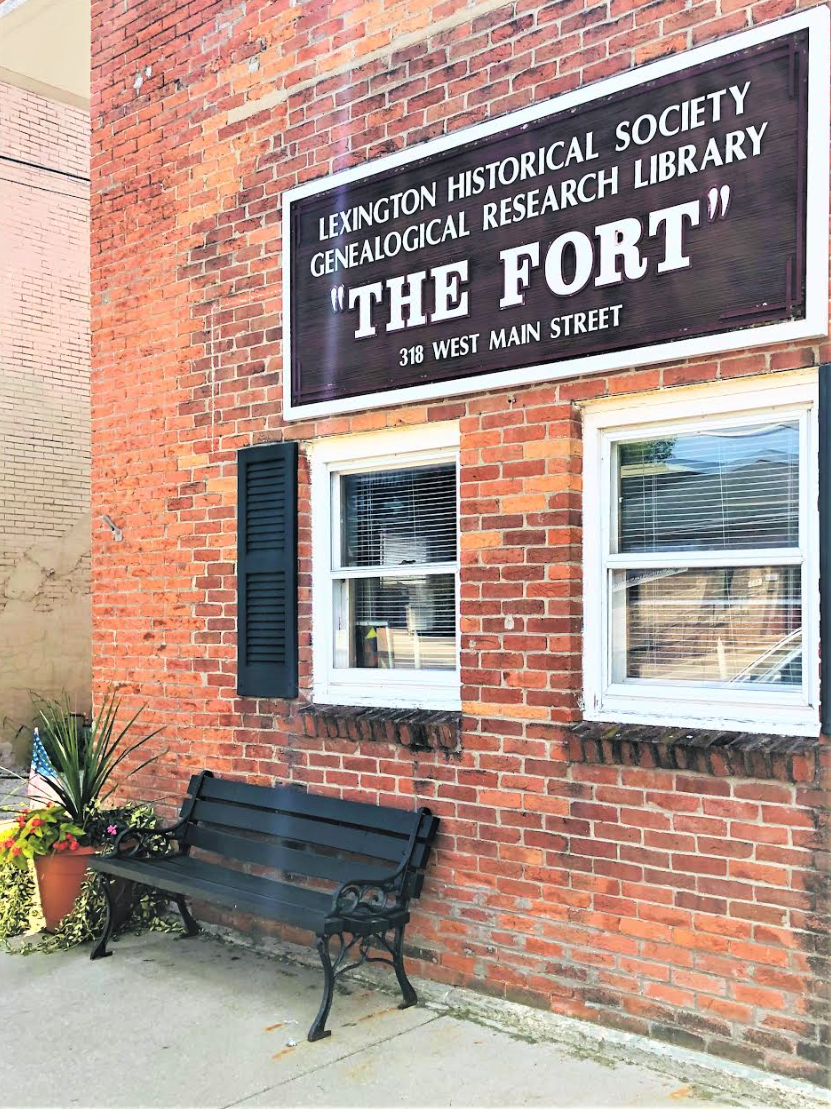
Keeping the Record Straight: 318 West Main Street and THE FORT
The sturdy one-story brick building at 318 West Main Street in Lexington has been many things in its long life. It looks like an antique; a functioning piece of history; a fortress preserving the past. It is a fitting home for the Lexington Genealogical and Historical Society.
Before it housed thousands of local records and artifacts, 318 W. Main St was a bank, then several different banks, then an insurance office, a flower shop, a repair shop, and a CB radio store. Since 1979 it has been home to THE FORT, the Lexington Genealogical and Historical Society.
The building itself dates to around 1868, when J.C. Mahan added it to his holdings on West Main to serve as a proper home for the banking operation he and S.R. Claggett had been running out of a small frame building on Cedar Street since 1866. By the accounts of the day, that earlier arrangement was precarious enough that Mahan and his partner L.P. Scrogin alternated taking the bank's cash home each night, since they had no vault. The brick building on Main was a statement of permanence for Mahan and Claggett. With Claggett as president, most people simply called it Claggett's Bank.
Over the next several decades the bank changed names with some regularity. It became the First National Bank of Lexington in 1882, then the People's Bank of Lexington in 1894 after Claggett's death, then was quietly sold to the State Bank of Lexington in 1896. When the State Bank moved to a new building at Cedar and Main in early 1900, another bank, the Home State Bank, opened in the same spot within months. The building seemed to have a gravitational pull on Lexington's early financial life. That ended in 1910 when a reorganization followed personal financial trouble among the bankers, and the last bank occupant moved out by 1914.
After the banks ran their course, the building settled into a quieter life. Tilden Patton, a farmer-turned-civic-enthusiast from the Pleasant Hill area, bought it around 1915 and ran an insurance and real estate office there for more than forty years. Patton was a man of the community: serving as mayor, school board member, movie theater manager, amateur historian, and proud descendant of the Patton family whose 1827 cabin still stands in PJ Keller Park. He and his second wife Helen were fixtures in the community until his death in 1957. Helen kept the insurance business running through the late 1960s, when it transitioned to Payne Insurance Agency in the same building. After that came a flower shop, a heating and repair business, and Bernie Blakney's weekend CB radio shop, which in 1976 was still a viable brick and mortar business in the downtown district.
THE FORT Finds a Home
Then,in September 1979, 318 West Main became THE FORT. Verda Gerwick, the woman who founded the Lexington Genealogical and Historical Society back in 1965, negotiated the purchase of the building for $13,000. The money had been scraped together from fundraisers, dues, and donations. Volunteers did the remodeling. Records that had been scattered around town in attics and basements and courthouse drawers were gathered into the building and organized. The organization everyone called THE FORT had a home.
The name THE FORT is not accidental. It suggests something defended, held, maintained against the slow erosion of time. That is more or less what Verda Gerwick had in mind when she founded the society fourteen years before she bought the building. In its early days, volunteers painstakingly transcribed records from courthouses and cemeteries across four counties to document vital information about individuals and their histories. It was slow and intensive work, done by locals who understood that if no one wrote it down, it would be lost.
What THE FORT set out to preserve was its locality. Broader and larger historical societies often have more resources to undertake preservation of records and history, but in their scale can miss the specific, granular, often undocumented record of ordinary life in a small community. Beyond records, FORT volunteers have mental logs of Who’s Buried Where, How Things Actually Happened, and What Life Used to Be Like. What the newspaper said on a given Tuesday in 1887. Which families left Lexington and which stayed. These insights help make sense of the massive collection of records.
THE FORT has collected cemetery records across McLean, Livingston, Woodford, and Ford Counties, and by 2020, the collection covered 110 McLean County cemeteries alone, with many records including sexton records and burial maps.That kind of specificity makes THE FORT a useful local resource for residents or the-great-great-granddaughter of a resident looking to find out something concrete about their lineage. It’s also an incredible resource for local amateur historians and homeowners looking for information on their home, local buildings, or any other number of topics that might make an interesting article for The Lexington History Project.
The Work Continues
Thework has expanded considerably since those first transcription sessions. Volunteers undertook a decade-long mission to digitize old Lexington newspapers, including issues from 1863, and the entire collection was eventually added to Newspapers.com, where the records are permanently preserved and available to researchers worldwide.Research tucked away in binders and folders has become accessible, thanks to a small group of volunteers spent years digitizing the vast archives
In 2026, THE FORT provided extensive research to Bolt Cutter and the City of Lexington to help create The Lexington History Project (what you’re reading right now). Without their extensive record keeping and organization, the history of these local spaces would be lost to time. Any uncited date or source quoted in a Lexington History Project article came from THE FORT.
THE FORT is operated entirely by volunteers and supported by membership dues and research donations.It is open Wednesday, Friday and Saturday from nine in the morning until two in the afternoon, and by appointment for curious would-be historians. That schedule reflects the reality of volunteer-run institutions: they exist because people choose to show up, and they depend on that choice being made again and again. As volunteers are able, they provide history reports on local homes to homeowners upon request.
The building at 318 West Main has not been without its difficulties in recent years. A fire in February 1981 destroyed the pool hall next door and permanently destroyed the upstairs apartment, but a new roof went up and THE FORT was back in operation within months. In 2021 and 2022, major repairs were made to the foundation and basement, work inspired by a donation from the family of Rita Leake and carried out by Greg Roberds and a crew of volunteers. The building, like the organization inside it, has required sustained attention to stay standing.
The behind-the-scenes work THE FORT does is easy to take for granted until it is gone. Local history requires painstaking labor to preserve. Time is ambivalent on whether the past is remembered or forgotten. The decisions that shaped a community, the businesses that opened and closed, the homes built, and the people buried in local cemeteries will fade away if they aren’t actively remembered and recorded. When a genealogical society closes, or when its records are dispersed or lost, that information does not simply migrate somewhere else. It disappears.
The building that Mahan* (*a name we only know because of THE FORT’s efforts) put up in 1868 to house a bank with no vault has outlasted every financial institution that ever occupied it. The now one-story brick at 318 West Main has proven more durable than any of the enterprises that used it as a temporary address. The organization that now calls it home is still hard at work transcribing records, researching, and supporting community preservation projects. Just like they’ve been doing for nearly 60 years.
Author’s Note
The more than dozen articles compiled in 2026 for The Lexington History Project could not have happened with any sort of historical legitimacy without extensive research from THE FORT, specifically Jan, Pati, and Marie. These articles are not comprehensive, like the records of THE FORT are comprehensive. But without THE FORT’s meticulous care and cataloging, the true stories told in this series would be lost to history.
If you care about Lexington’s local history, consider volunteering with THE FORT.
THE FORT is located at 318 West Main Street in Lexington, Illinois. More information, including research services, volunteering, and membership, is available at lexingtonillinoishistorical.org or by calling (309) 365-4591.
Additional Author’s Note
The author subscribes to the school of thought that “the only true rule of the English language is comprehension.” In this spirit, I decided that when the Lexington Historical and Genealogical Society is referred to as THE FORT, the name should present it all upper case. Why? Because whenever I walk by the building on Main Street and see the wooden sign hanging on the facade with “THE FORT” in all caps, it strikes me as a bold and correct visual statement. To capitalize, or in some way set the title apart, feels like a proper way to capture the essence and importance of this rich bank of archives and the people who preserve them. THE FORT is central to the Lexington History Project, and a central hub of nearly all the information compiled here. All roads lead back to THE FORT.
By elevating THE FORT to all caps in print, it anchors the wandering eye and signifies the presence of something set apart. In certain online communities of writers, critics, and journalists, a film’s title is capitalized in the same way. I don’t know how that practice started, but I always found it an easy way to keep track of important subject matter in a fast-moving current of information. THE FORT has information that could be the plot of endless films, and now it’s our responsibility as local citizens and private historians to find those stories worth telling. The Lexington History Project is just one attempt to do that. And I would encourage you to find your own connection to the history of your community. If you’re associated with Lexington, Illinois, you’ll find no better resource for that task than THE FORT.
Also, the volunteers at THE FORT tend to refer to THE FORT in all caps, too. I haven’t asked them why yet. But like any proper storyteller, I tried to invent a good reason.
-Nicholas Rynerson, April 2026
All Lexington History Project articles were written and edited by Nicholas Rynerson and Elizabeth MacPhail, with research and editorial contributions from THE FORT Historical and Genealogical Society in Lexington, Illinois.
A Note on Citations: All non-cited facts, dates, and addresses were provided from the archives of THE FORT Historical and Genealogical Society in Lexington, Illinois. For any additional information on specific town history, email THE FORT at thefortoflex@aol.com. For any suggested chronological changes regarding the information in this article please email nick@bolt-cutter.com.
Like this article? Download a PDF
Find All the Articles Around Town
Click through the custom Google Map below to find all of the Lexington History Project signs and articles placed around town.
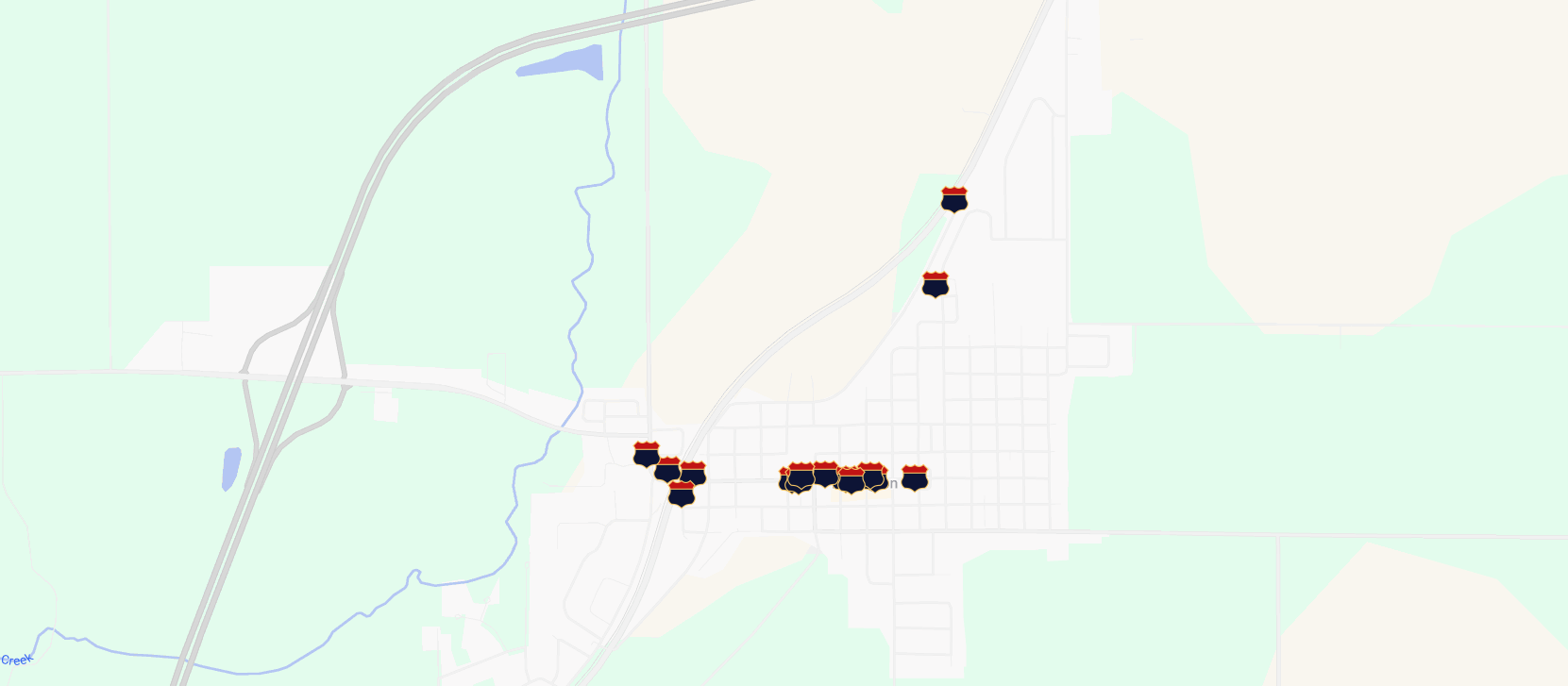
Presidential Visits. Supreme Court Cases. Railroads. Route 66.
Established in 1836.