
Main Street: The Street That Built Lexington
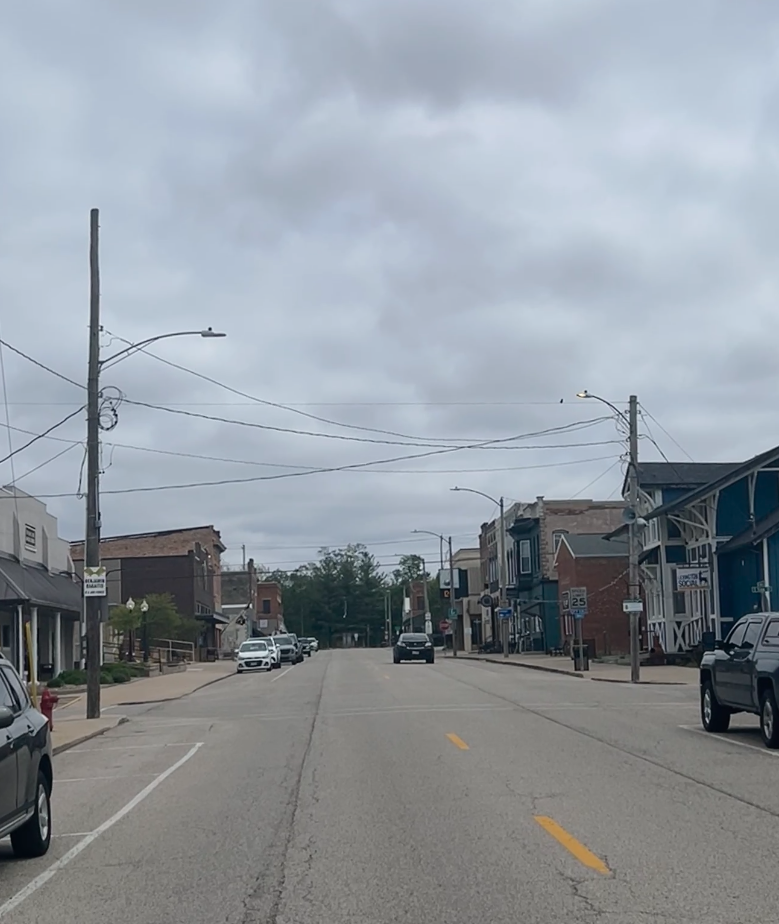
The Street That Built a Town: Main Street, Lexington
A narrative history from 1836 to today
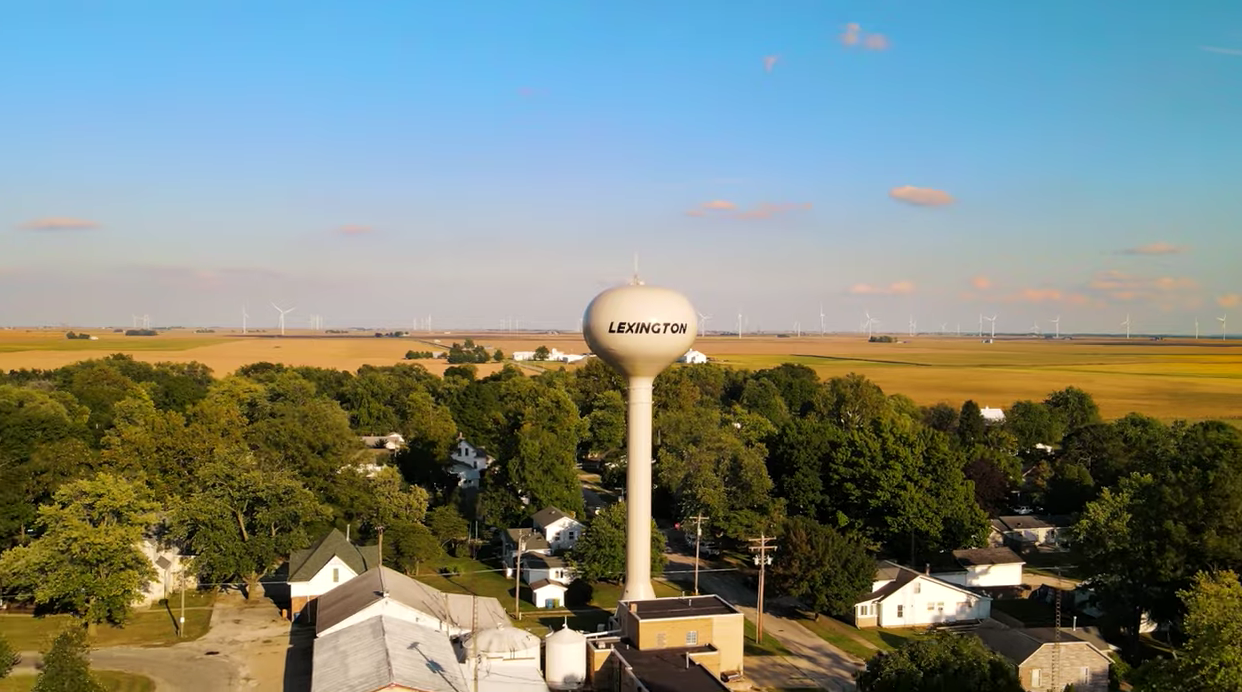
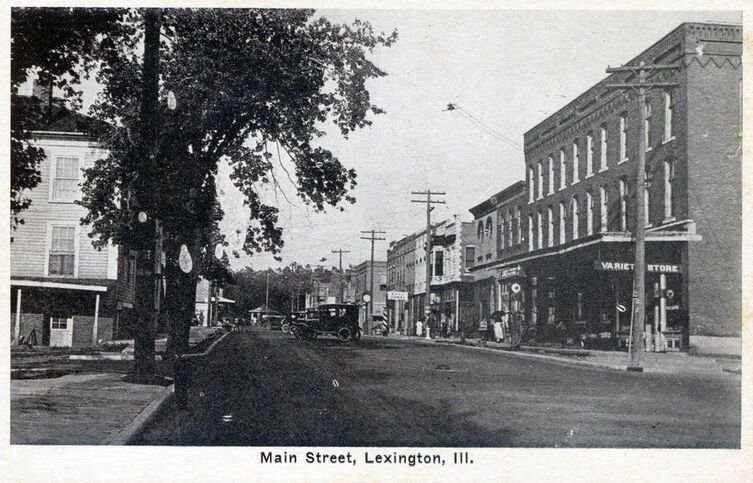
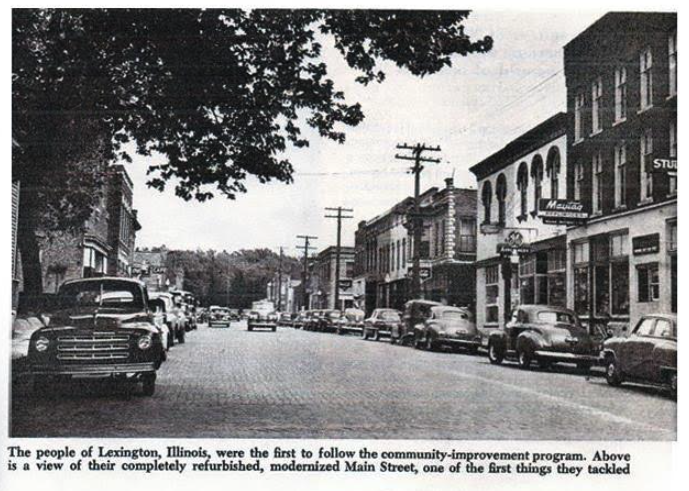
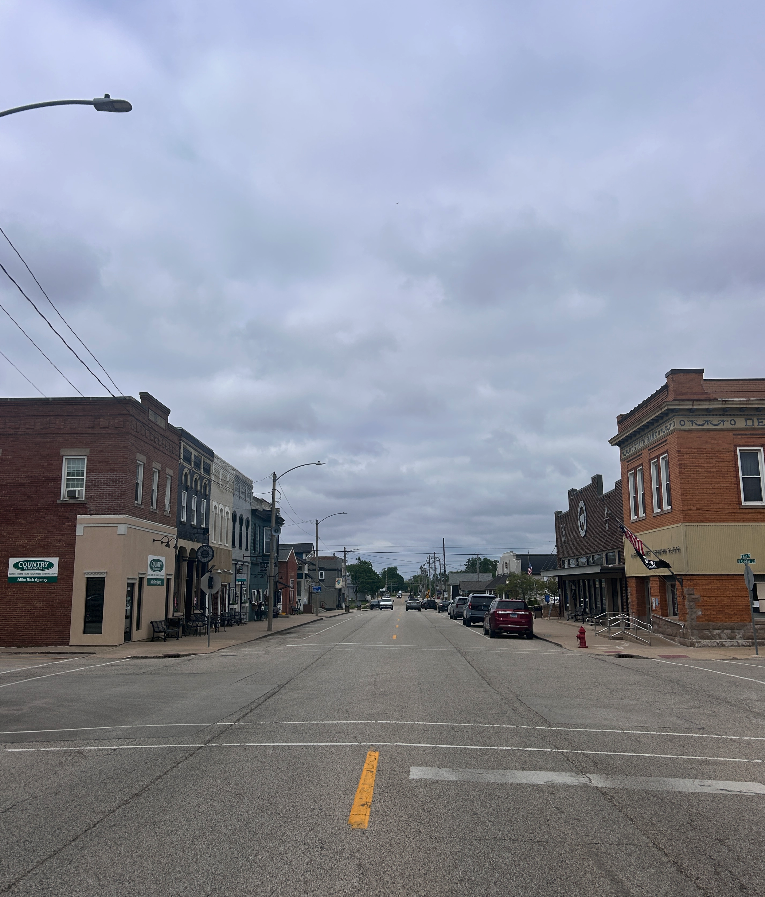
Small town USA Main Streets are a mythologized place currently undergoing a renaissance. In Lexington, Illinois, Main Street is a horizontal line stretching west from Route 66 and ending east of town overlooking a seemingly endless cornfield. On Main Street, the community grew, contracted, reinvented itself, and grew again with each new wave of transportation. To walk its blocks today, past a craft brewery, locally owned boutiques, restaurants, coffee shops, and offices, is to walk through layers of time. Below the current paint and signage lies a question: What is the purpose of a small town?
The answer, it turns out, is as layered and multifaceted as the people who have done business on Main Street since the 1850s.
Before There Was a Street
When Asahel Gridley and James Brown platted Lexington on January 4, 1836, they designed it around a central public square, with streets running true north-south and east-west. Main Street was not an accident; it was built, like so many towns in central Illinois, to be the main commercial district of Lexington. The very first building in town was a dry goods store built by Mr. Carpenter on the north corner of Main Street and the public square. The grocer was stocked with goods hauled up from St. Louis.
The business failed within a year. The national panic of 1837 hit hard, and for a time, the survival of Lexington itself was in doubt. The store goods were carted to Bloomington; the building followed. The town square became a grazing ground for cattle. For nearly two decades, Lexington was more aspiration than reality.
In competition with the town of Pleasant Hill, the Chicago and Alton Railroad selected Lexington as a fine place to visit and made its first stop on July 4th, 1854. Hotels, stores, and workshops sprang up almost overnight. The population doubled. A business directory from 1860 (just six years later) listed six general stores, four grocery stores, two drug stores, a hardware store, two furniture stores, a jewelry store, a lumber yard, three blacksmiths, four carpenters, a newspaper, three hotels, six physicians, and two lawyers. Nearly all of it on or just off Main Street.
"This town is located on the Chicago and Alton Railroad, in the midst of a rich farming district. It is a handsomely built place..." — Atlas of McLean County, 1874
Main Street in those years was a necessity. You went there because you had to go: for flour, for fabric, for news, for banking. The street existed to keep people alive on the prairie, and the people on the prairie existed, in large part, to keep the street alive.
The Lindsays: A Century on the Corner
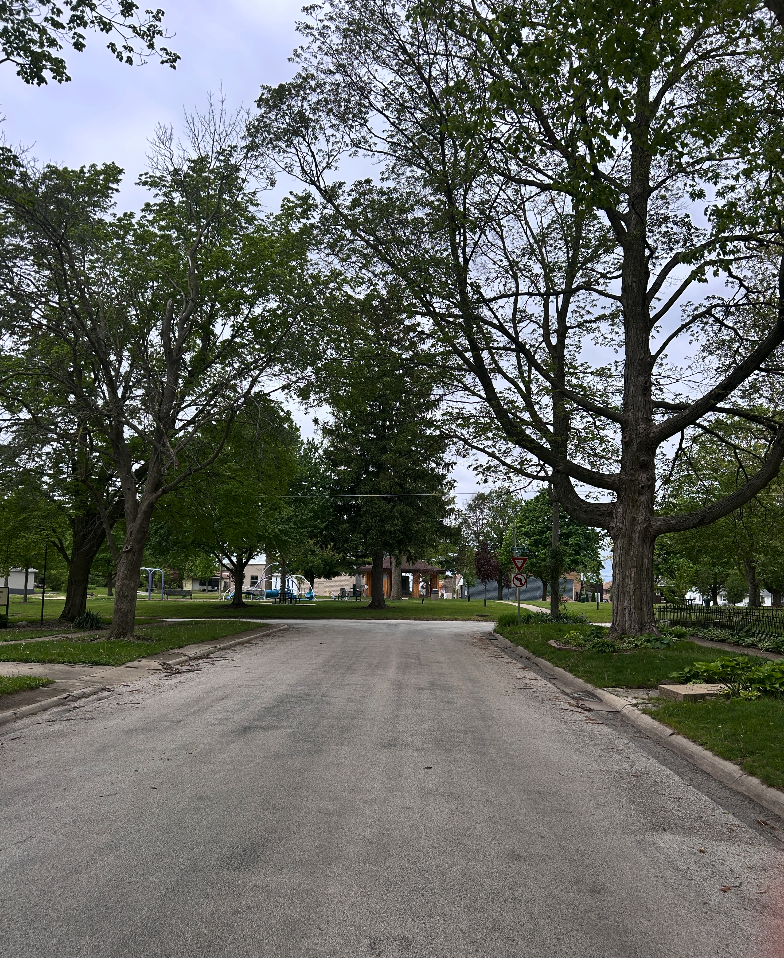
In 1859, William Lindsay Sr. joined his son-in-law Richard Grier to open a general store in a 26-foot-wide building on that corner. Lindsay was a native of Scotland who had made a name for himself as a city carpenter, credited with building many of Lexington's early residences and planting the trees that would come to define what locals called Lindsay Park (now Lexington Park). He kept cows and grazed them on the public square. His store sold the essentials like coffee, tea, spices, sugar, and dry goods.
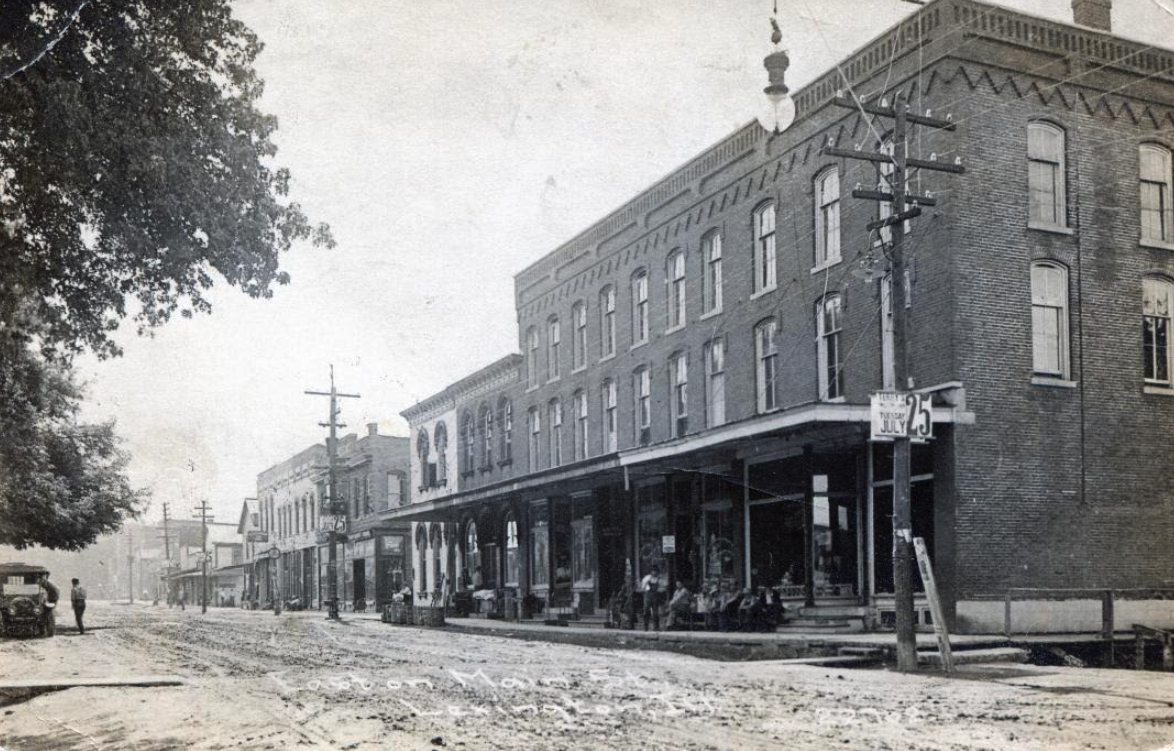
Lindsay’s son-in-law, Richard Grier left to serve in the Civil War and eventually opened his own store in Bloomington when he returned. But the Lindsays stayed; William Linday's sons John and William Jr. came into the business. A brother-in-law, G.J. Smith, joined as partner in 1885. By the 1890s the inventory had expanded to include work shirts, overalls, oxford-tie shoes, velvet ribbons, and more. In 1904, the original wooden structure was replaced by a handsome two-story brick building on the same lot. A community hall on the upper floor hosted meetings and gatherings. The store was becoming an institution.
William C. Lindsay (the third generation) came into the business after World War I and inherited sole ownership when both his father and G.J. Smith died in 1927. By 1934, when the store celebrated its 75th anniversary, at least fifty customers came forward to claim gifts for more than fifty years of patronage. These were people who had been shopping at the same corner since before the Civil War.
But Main Street was not standing still. The mid-twentieth century brought chain affiliations and expanding ambitions. The Lindsay store joined the Happy Hour Stores organization in 1938, sharing advertising resources with other local grocers. By 1951 it had affiliated with a regional brand called Lindsay's Superway. By 1954, with expanded offerings including televisions and antennas, it had grown into Lindsay's Department Store. Along with the rest of the street, the general store had evolved quickly with the times for nearly a hundred years.
William Lindsay IV, who had served in the Navy, came home to join the family business. A son-in-law, John Brown, was part of the operation too. The fourth generation was at the counter. The corner of Main and Pine had seen the Civil War, two World Wars, the Great Depression, the arrival of Route 66, and the dawn of the television age, and still the Lindsays were there.
The family finally sold the grocery operation in 1964 to Glen Ralston, a longtime store manager. The building at 125 West Main was sold to Earl Turnipseed, who moved his five-and-dime variety store, which had been operating on the south side of Main Street since 1953, to the old Lindsay location on the northeast corner.
What followed was a typically American succession of owners, names, and purposes at 123 West Main. A B&J Superway, a brief return to the Lindsay's Superway name, and then by 1978, William Schoen's accounting business, followed by an attorney's office, and a computer center.. Tom Shields, Lexington's longtime city attorney (and descendant of the man who almost dueled Abraham Linccoln with broadswords on an island in the Mississippi River), has kept his office at 123 West Main since 1981. Two businesses, anchoring the same corner William Lindsay Sr. staked out in 1859, are still there.
Keeping the Books, Keeping the Money
If the Lindsay store was Main Street's most durable retail presence, the banks that lined the street over the years were its financial backbone, and their story is almost as colorful.
The first bank in Lexington, organized in 1865 by Jacob C. Mahan on Cedar Street, behind the Main Street post office at 301 W Main Street, had no vault and no safe. According to local accounts, Mahan and a stockholder named L.P. Scrogin would divide the bank's capital and deposits between them each evening, each carrying the funds home (money in one hand, a revolver in the other) and bringing it back the next morning. Banking on the Illinois prairie was not, in those days, for the faint of heart.
The institution reorganized and renamed itself multiple times over the following decades: the Bank of Lexington, then the First National Bank of Lexington, then the People's Bank, before the State Bank of Lexington (at the corner of Main and Pine) absorbed it in 1896. By January 1900, the State Bank of Lexington moved to a new building on the northwest corner of Cedar and Main, which would eventually become the current post office building.
Lexington's banking community managed to hold together during the , when banks across other small Illinois communities were failing or frozen. But it could not survive the Great Depression intact; the State Bank of Lexington closed in 1929. The People's Bank of Lexington, which had moved to the southeast corner of Cedar and Main after acquiring a former meat market building in 1914, survived and eventually became Commerce Bank, operating at that same downtown corner for decades before consolidating into larger branches in Bloomington-Normal.
Today, Heartland Bank of McLean County maintains the only physical banking presence in Lexington.
The Twentieth Century
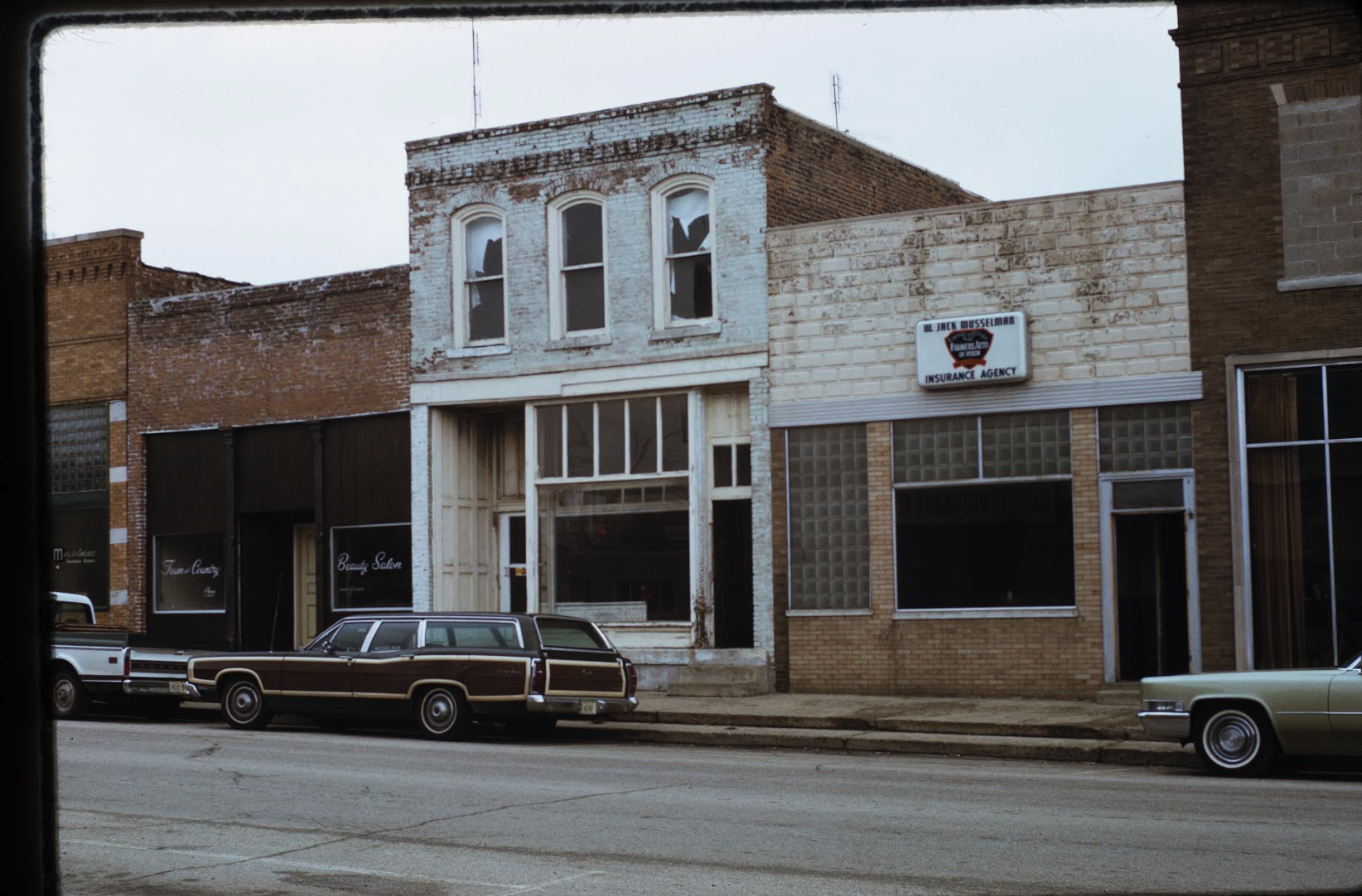
Through the second half of the twentieth century, small-town Main Streets across America entered a long, slow decline. Postwar America was changing rapidly: the Interstate Highway System drew traffic away from downtown corridors. big-box retailers in nearby cities offered prices local merchants couldn't match, populations were moving to suburbs and cities, and many young people left small town America and didn't come back.
Lexington was not immune to these changes. The railroad era ended and Route 66, which gave the town a second economic life as a stopping point between Chicago and St. Louis, lost out to the large, new Interstate 55. And while Lexington still had an exit on the new Interstate, traffic was now passing by Lexington and not through Lexington. This led to inevitable decline as storefronts emptied. Lexingtonians drove to Bloomington-Normal and other local metros for their essentials, and Interstate traffic passed Lexington by. The Lindsay corner cycled through owners and the old train depot sat empty for a time. But Lexington did not disappear. The same geography that had made it a railroad stop kept it tethered to the larger world.
The Second Story: Main Street Reborn
The revival, when it came, came quietly at first, then all at once.
It started with a familiar last name: Kemp. Jon Kemp opened Kemp’s Upper Tap nearly 20 years ago (in the small brick building where Haven Hill Boutique currently sells artisan goods and clothes). Since the early 2000s, Kemp’s (as it’s known locally) has had a world-class beer menu, iconic Saturday morning specials (“The Cure”), and best-in-class pub fare, all owned and operated by a Lexington native and his team.
The momentum on Main Street has continued to build. Since 2020, local boutiques, restaurants, coffee shops, and bookshops have opened and helped create a vibrant shopping district.
Lexington Social now lives in the Train Depot, which was painstakingly moved to 322 West Main Street in 1981. Chef Jon Fritzen carefully restored the 1888 building, and it has become a place people drive from surrounding cities to eat and drink. Analytical Brewing, opened on Main Street in 2022 by three couples who brought backgrounds in chemistry and craft beer to a lovingly renovated storefront, added a taproom and a community gathering place where there had been an empty building.
In 2022 Sirius Coffee Roasters, owned by April Fritzen, chef Jon Fritzen of Lexington Social’s sister-in-law, moved to Main Street and began roasting their specialty coffee on the spot where the old Train Depot used to stand. Today, Sirius has expanded to include an all day cafe/bar and drive-through coffee shop.
"I think it's really what the city of Lexington is doing to draw business in. Lexington was the first place, kind of on our short list." — Andy Graves, Analytical Brewing co-owner
By 2026, more than a dozen new local businesses had opened in Lexington in just two years. The town's mayor, Spencer Johansen, was selling Lexington as a destination, with "small town feel, big city amenities". Lexington as a “destination” would have been unthinkable two generations earlier, when it saw itself as simply a stop for travelers. A housing shortage, of all things, has become one of the town's most pressing concerns.
What Main Street Has Always Been
It is tempting to describe what is happening on Lexington's Main Street today as something new: a renaissance, a reinvention, a rediscovery of small-town authenticity. And there is truth in that. The craft brewery and the farm-to-table restaurant and the boutiques represent a new vision of what a downtown can offer.
But in another sense, nothing has changed at all. The first store on Main Street, opened by Gridley and Carpenter in the winter of 1836, was there to give people something they needed and couldn't easily get elsewhere. The Lindsay store served that same function for a hundred years, adapting its inventory from spices and yard goods to televisions and department-store merchandise as the community's needs changed. The banks kept money safe and available. The depot moved people and goods in and out.
What Lexington's Main Street has always been, at its best, is a place where the community meets itself, and where the community meets the world. The goods change. The buildings are repaired. Families sell and move on, and new names appear on the glass. But the desire to participate in an interconnected local community doesn't go away. It just finds new ways to exist.
All Lexington History Project articles were written and edited by Nicholas Rynerson and Elizabeth MacPhail, with research and editorial contributions from THE FORT Historical and Genealogical Society in Lexington, Illinois.
A Note on Citations: All non-cited facts, dates, and addresses were provided from the archives of THE FORT Historical and Genealogical Society in Lexington, Illinois. For any additional information on specific town history, email THE FORT at thefortoflex@aol.com. For any suggested chronological changes regarding the information in this article please email nick@bolt-cutter.com.
Like this article? Download a PDF
Find All the Articles Around Town
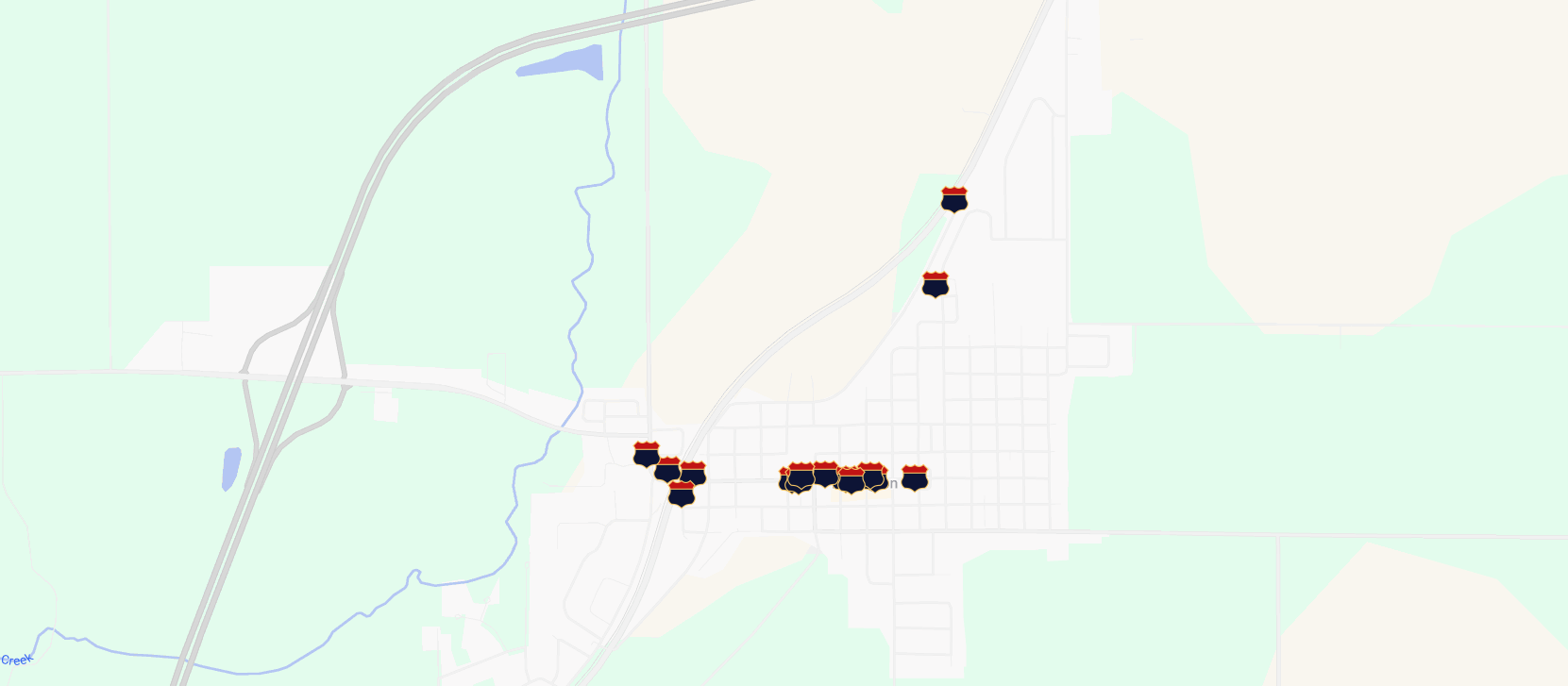
Click through the custom Google Map below to find all of the Lexington History Project signs and articles placed around town.